

Pulp Preparation
Repulping and agitation equipment disperses prepared bagasse pulp into a workable fiber slurry for production.
Bagasse tableware manufacturing equipment works as a connected system that prepares fiber slurry, forms wet products, removes moisture, stabilizes product shape, finishes edges and supports inspection and packing.
Youshang uses molded-fiber production equipment to support plates, bowls, clamshell containers, food boxes and compartment trays for B2B orders. The production team selects the appropriate mold and operating arrangement according to the approved product specification.
Slurry preparation, vacuum forming, mold condition, pressing, trimming and handling work together as one production system. Line configuration and process settings vary by product format.
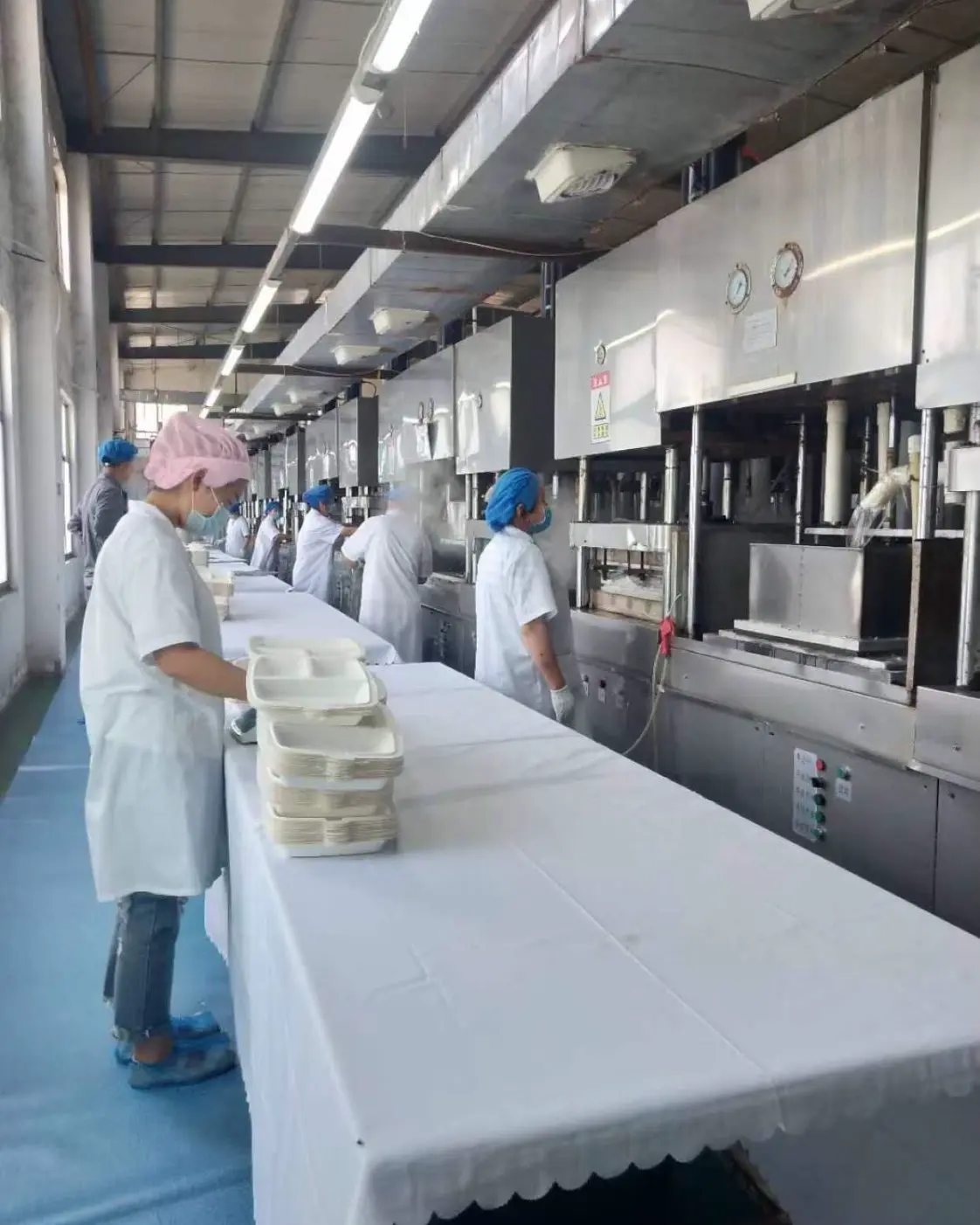
A commercial molded-fiber line combines material preparation, forming, drying, finishing and supporting utility systems.
Repulping and agitation equipment disperses prepared bagasse pulp into a workable fiber slurry for production.
Tanks, agitators, pumps and pipelines maintain slurry circulation and move prepared stock toward the forming area.
Screen molds and vacuum dewatering equipment build a wet fiber preform in the required product geometry.
Heated matched molds remove remaining moisture, consolidate the fiber structure and stabilize dimensions and finish.
Finishing and transfer equipment releases products, removes excess edges and moves accepted pieces to the next stage.
Workstations, counting arrangements and packing equipment support final checks and commercial order preparation.
Pulp preparation equipment establishes the material condition required by the forming machine. Its job is to separate compressed fiber, maintain circulation and deliver a more uniform slurry to production.
Prepared bagasse pulp is combined with process water and mechanically dispersed. The equipment breaks apart pulp sheets and fiber bundles so the material can be pumped and distributed across the forming mold.
Storage and preparation tanks keep the slurry moving before it enters the forming system. Agitation helps limit settling and fiber clumping, while the production team adjusts the slurry condition for the item being manufactured.
Pumps and pipelines move slurry between preparation, storage and forming areas. Stable delivery supports repeatable filling and forming cycles; line configuration may also include screening or cleaning stages according to the material and process design.
Forming and pressing equipment creates the three-dimensional product. The machine, vacuum system, transfer mechanism and matched tooling must operate together to protect shape and material distribution.
The forming station brings the mold into contact with the prepared slurry. Vacuum draws water through the screen surface while fibers remain on the tooling and build the wet preform. Product depth, compartments, hinge areas and wall geometry are defined by the mold.
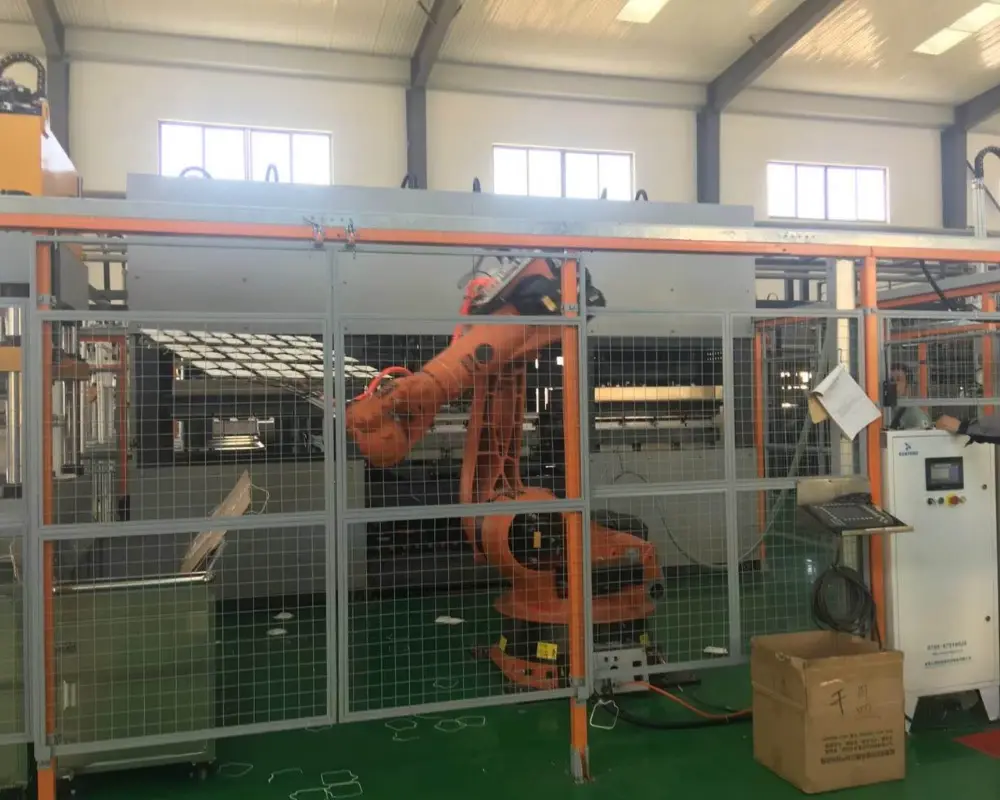
The wet preform must move from forming to pressing without losing its intended geometry. Depending on the equipment arrangement, transfer may be completed through matched tooling, mechanical handling or an automated system designed for the line.
Heat and pressure remove moisture and consolidate the fiber network. The press and tooling influence surface finish, rigidity, dimensional stability and release from the mold. Settings are selected for the specific product instead of being fixed across every SKU.
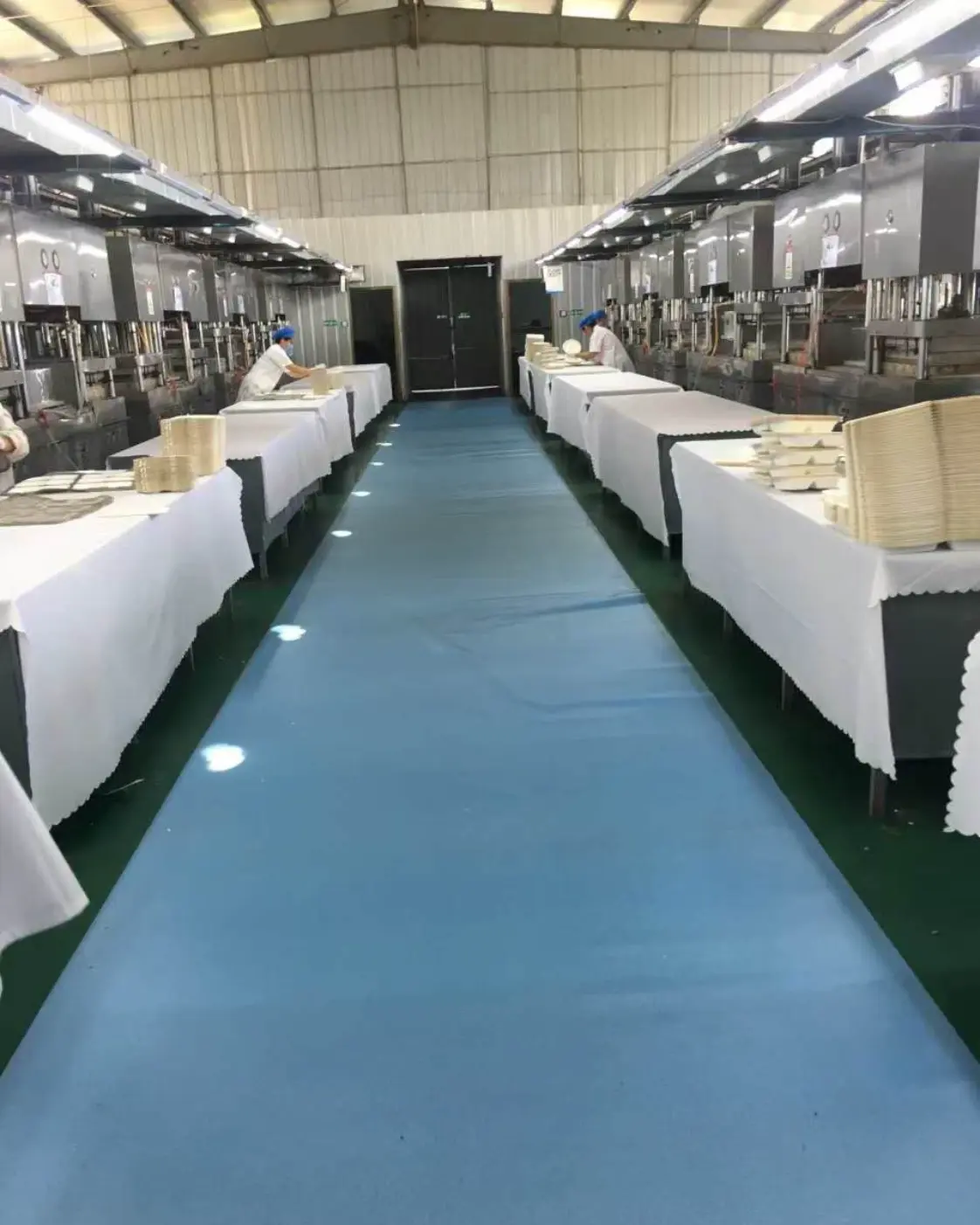
Production equipment provides the motion and process conditions, while molds and finishing tools define the individual product.
Plates, bowls, clamshells and compartment trays require corresponding forming and pressing molds. Mold geometry determines dimensions, cavities, compartments, edges and other structural details.
Edge finishing removes excess molded fiber and produces the approved outline. Trimming requirements depend on the mold design, product profile and equipment configuration.
Automated handling can support transfer, demolding, stacking or movement between stations. The purpose is to coordinate repeatable handling while reducing unnecessary product contact.

Useful answers for buyers reviewing equipment, molds and production arrangements for molded-fiber tableware orders.
A complete production arrangement generally includes pulp preparation and slurry tanks, pumps and pipelines, vacuum forming equipment, heated pressing molds, trimming equipment and inspection and packing workstations. Supporting vacuum, water, air and control systems connect these stages.
Compatible product formats may run on the same equipment platform when the correct forming, transfer and pressing molds are installed. Product depth, geometry, mold size and machine configuration must be reviewed before compatibility is confirmed.
Molds define the product shape, cavities, compartments, hinge areas, edges and dimensions. Forming and hot-press tooling must match so the wet preform can be transferred, dried and stabilized correctly.
Customized production may be possible after the product structure, dimensions, mold requirements, material, packing and order quantity are reviewed. New designs normally require tooling development and sample approval before mass production.