



Kontakt
- +86 176 8572 4081
- Bezirk Shibei, Qingdao, Shandong, China
- info@ystableware.com
Soziale Medien
food delivery packaging
- Verpackungen für die Lebensmittellieferung
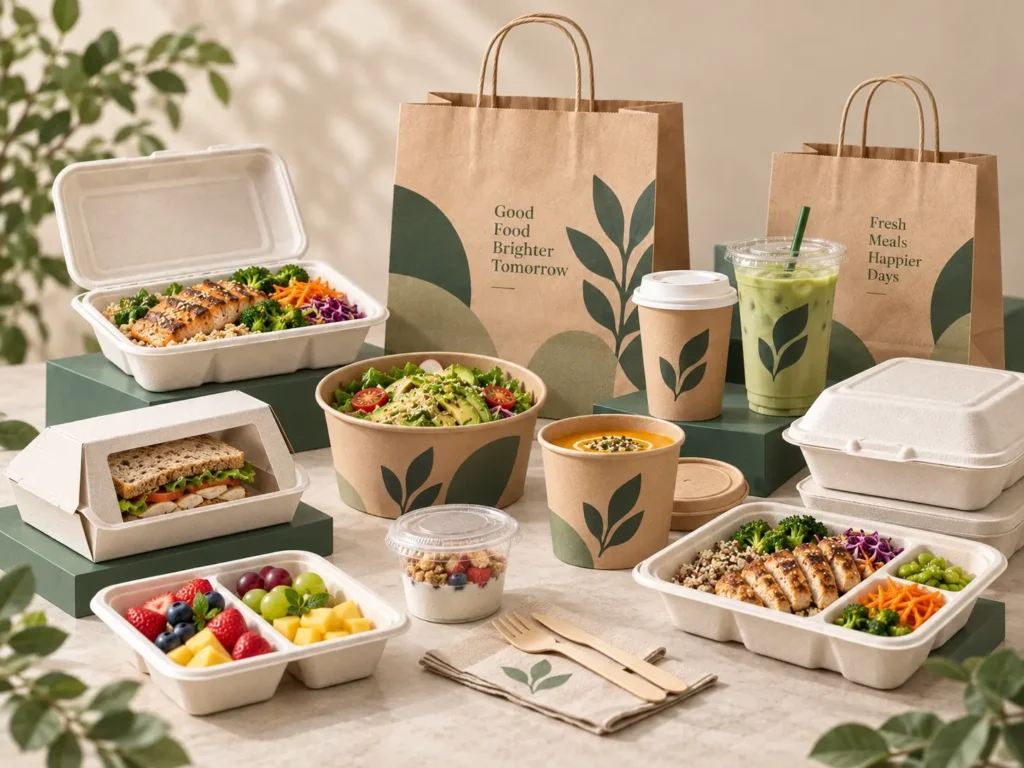
Packaging That Works From Kitchen to Customer
Youshang supplies food delivery packaging for restaurants, takeaway businesses, delivery kitchens, catering companies and foodservice distributors. Available products include bagasse food containers, bowls and trays, kraft paper food boxes and bags, paper cups, lids, straws and cutlery.
Food delivery packaging includes all the products used to pack and carry a meal: the container, lid, cups, accessories and delivery bag. Choose them according to the food, portion size, normal delivery time and way the packed meal will be carried.
Why Is Food Delivery Packaging Different?
A package that performs well on a restaurant counter may behave differently after it has been filled, stacked and carried.
Packed meals remain closed while containers move, meals are stacked and steam stays inside the package. Test the filled container, lid and bag together for the normal delivery time. The goal is to choose a suitable package for each main type of food, rather than use one package for every meal.
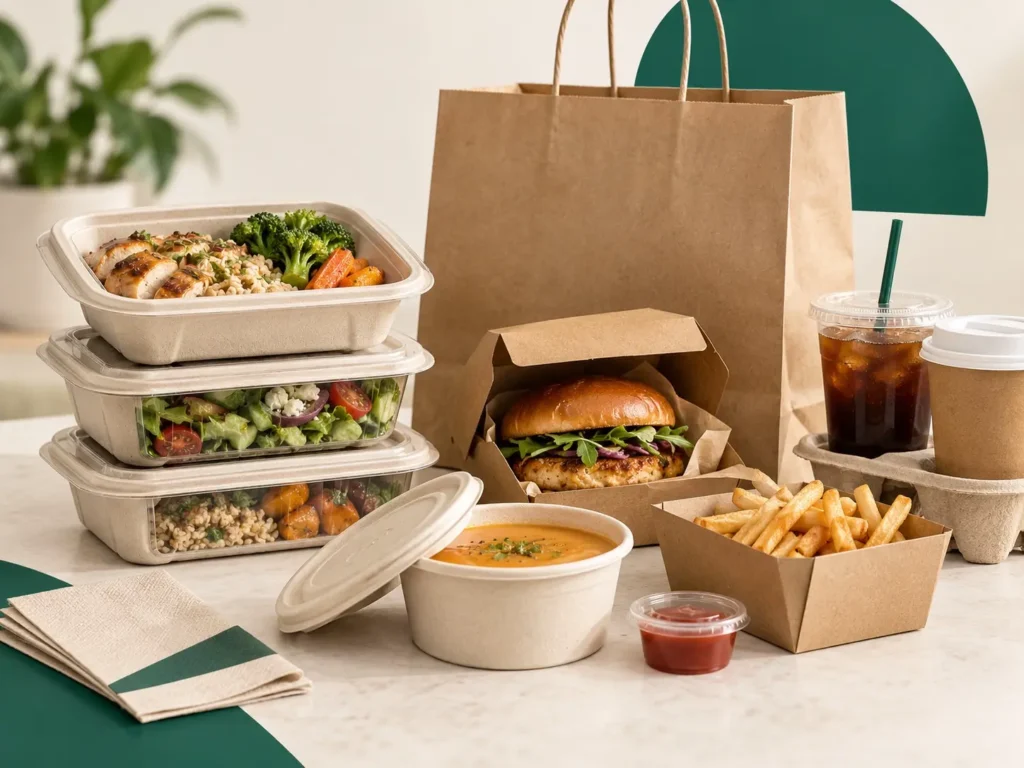
How Should Packaging Be Selected for Different Delivery Foods?
Different foods need different packaging. Consider the container depth, the empty space above the food, how securely the lid closes and how much the containers may move during delivery.
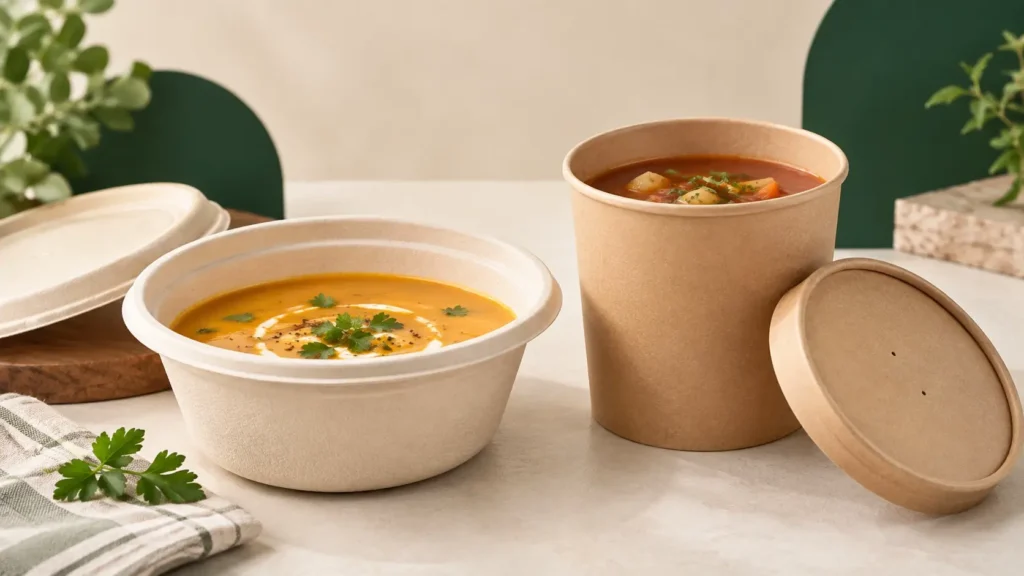
Soup and Liquid Food
Leave Space Above the Liquid and Use the Correct Lid
Soup, broth and curry normally need a deeper bowl or food container. Leave space between the liquid and the top edge so food does not press against the lid. Use the lid made for that exact bowl, then carry the filled bowl upright inside the real delivery bag.
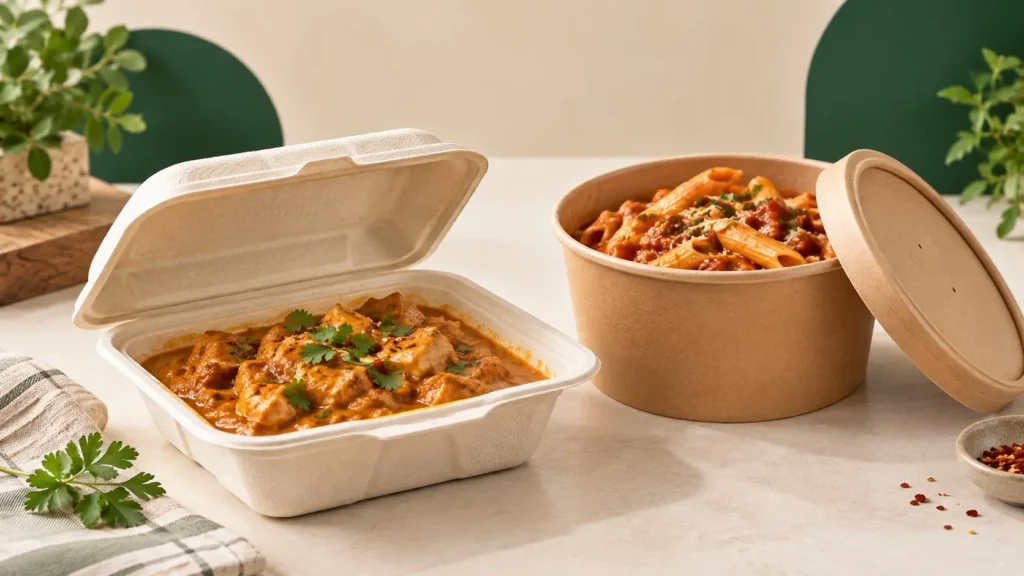
Saucy and Oily Meals
Test With the Food You Actually Deliver
Oil and sauce can affect packaging differently from dry food. Fill the selected food container with the normal rice, pasta or meat portion and leave it closed for the usual delivery time. Then check the bottom, corners, top edge and lid.
Fried Food
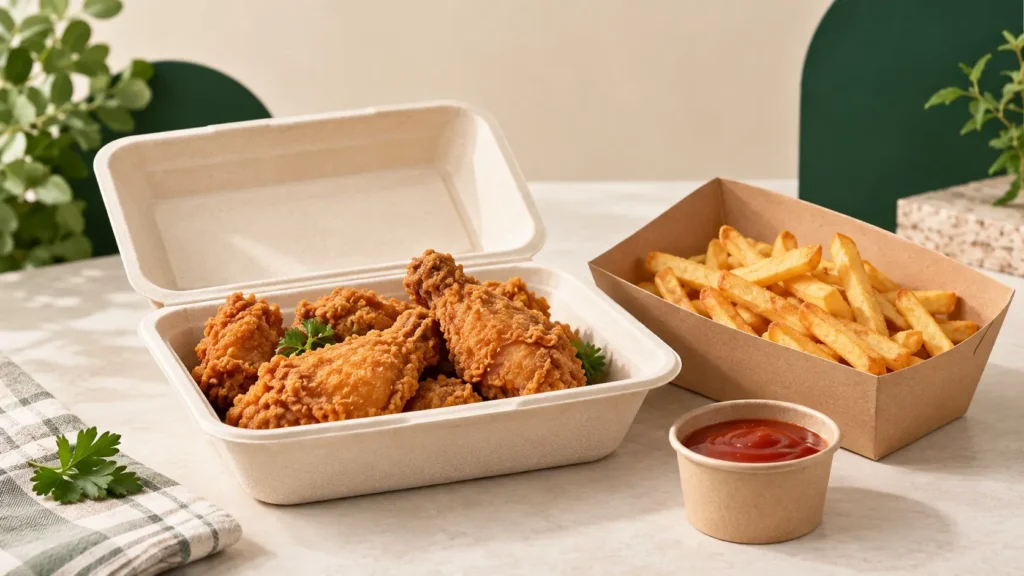
Steam Can Make Fried Food Soft
Fresh fried food releases heat and steam after the container is closed. This can change how the food looks and feels by the time it arrives. Test the actual menu item for the normal delivery time because the result depends on the food and container design.
Meals With Several Components
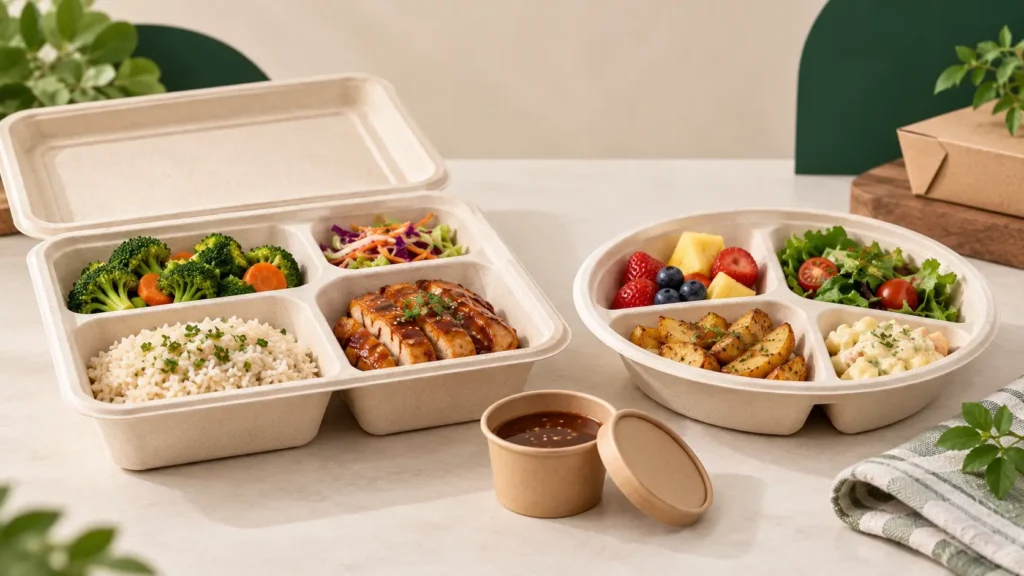
Make Sure Every Compartment Is Large Enough
A divided container can keep rice, vegetables, meat and side dishes apart, but each section has less space than an open container. Make sure every portion stays below the dividers and lid. Use a separate small container when a thin sauce must stay away from the other food.
Cold Food and Desserts
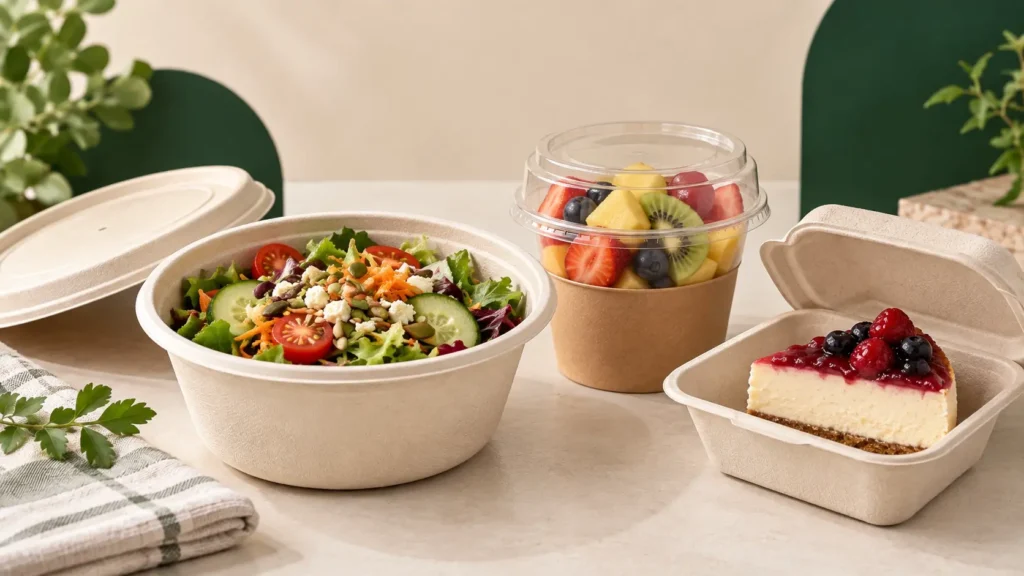
Stop Cold Food and Desserts From Moving
Salads, fruit, cakes and desserts can slide, tip over or become crushed during delivery. Choose packaging that fits the completed portion without pressing on the food or leaving too much empty space. Include the cake board or dessert cup when checking the size.
Drinks
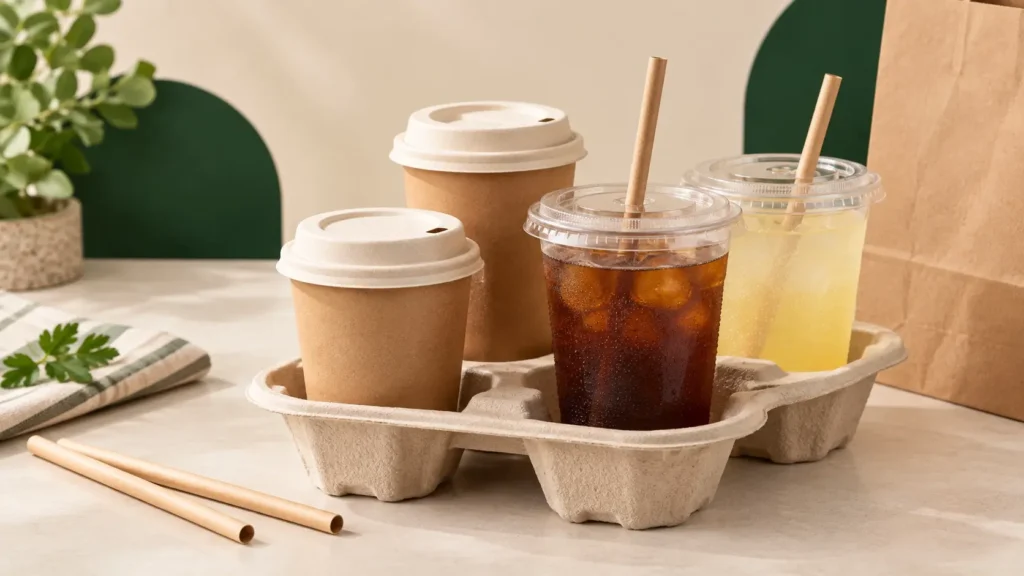
Keep Drinks Upright and Away From Meal Boxes
Use each paper cup with the lid made for it. When a paper straw is needed, check that it is long enough for the cup and fits the lid opening. Pack the actual number of drinks in the holder or bag and make sure meal containers do not press against them.
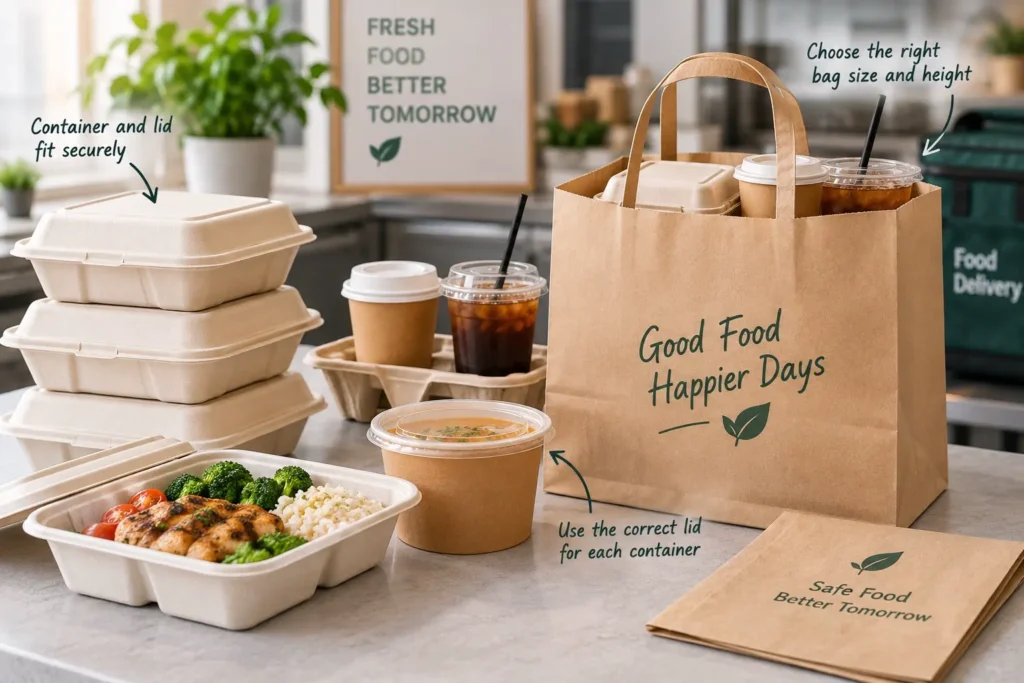
How Should the Container, Lid and Delivery Bag Work Together?
The food container is only the first part. Its lid must fit the top edge correctly and stay in place when the container is filled and stacked.
The paper bag should hold all containers and drinks without allowing them to slide or pressing their lids. Arrange a typical packed meal first, and then choose the bag width and height.
Check everything together: a secure individual container can still fail when it is stacked badly or placed in an unsuitable bag.
What Causes Food Delivery Packaging to Fail?
Most problems come from the relationship between the food, package and delivery method rather than from one detail considered alone.
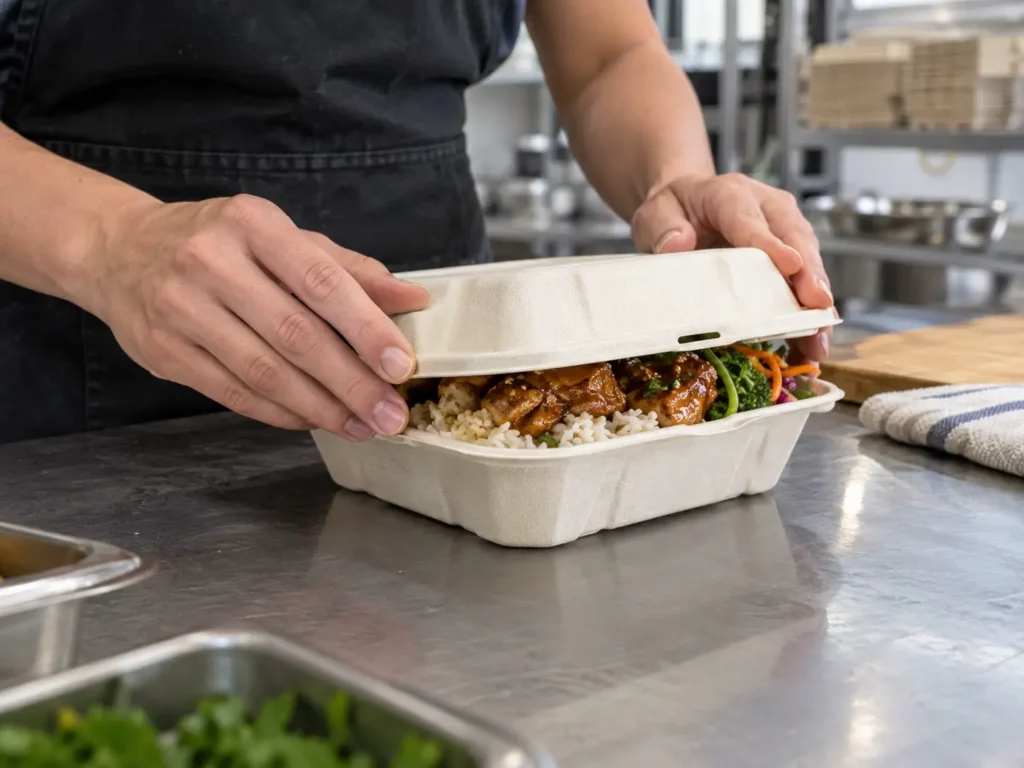
Container Too Full
The Container Is Filled Too Close to the Top
A container may have enough total capacity but too little empty space above the normal portion. Food that reaches the top edge can make the lid difficult to close. A deeper container or a different way of arranging the portion may work better than a wider one.
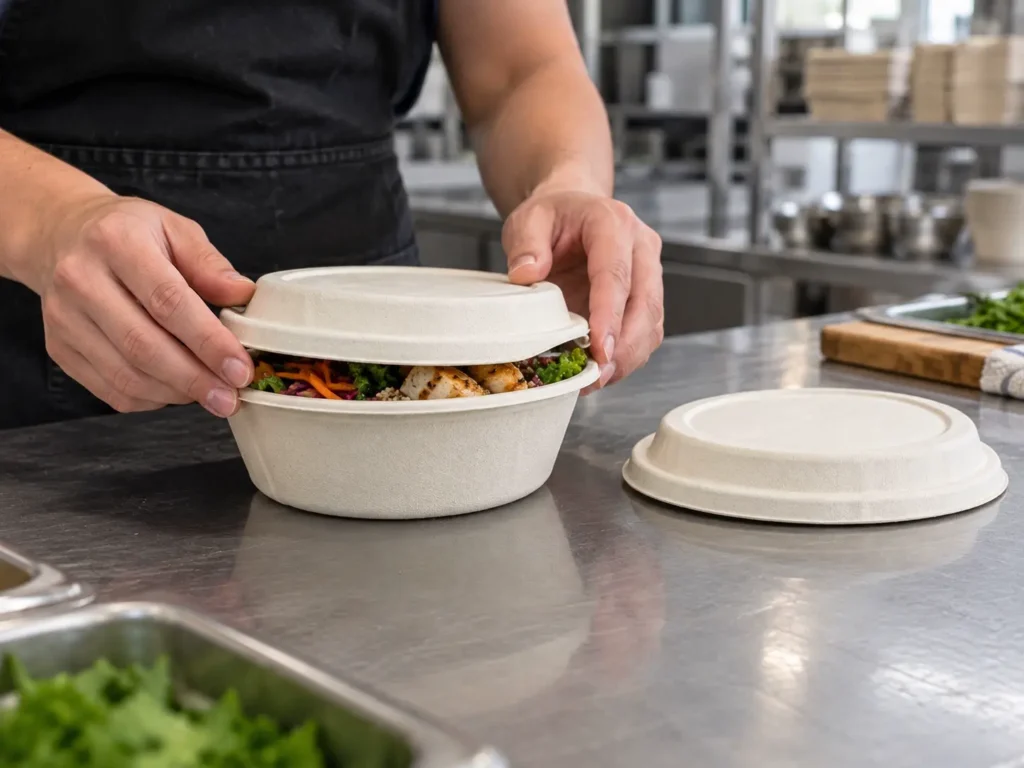
Incorrect Lid
The Lid Looks Right but Does Not Fit the Container
Use the lid made for the exact bowl or container, not one that only looks similar in size. Two bowls of the same capacity can have different top edges, and a lid that fits an empty bowl may still move after the bowl is filled and carried.
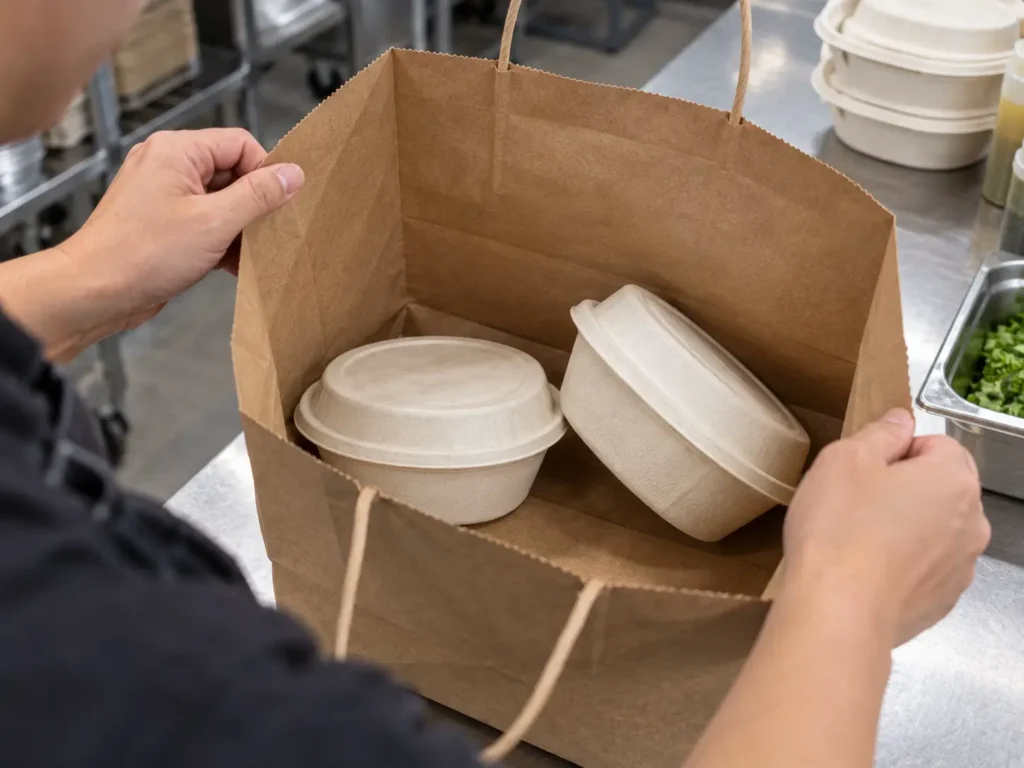
Bag Too Large or Too Small
Food Containers Can Move Inside the Bag
Even a correctly closed container can tilt when there is too much empty space around it. The containers should fit without sliding and without the bag pressing against their lids. Check the bottom size of every container and how everything is stacked.
Too Many Containers Stacked
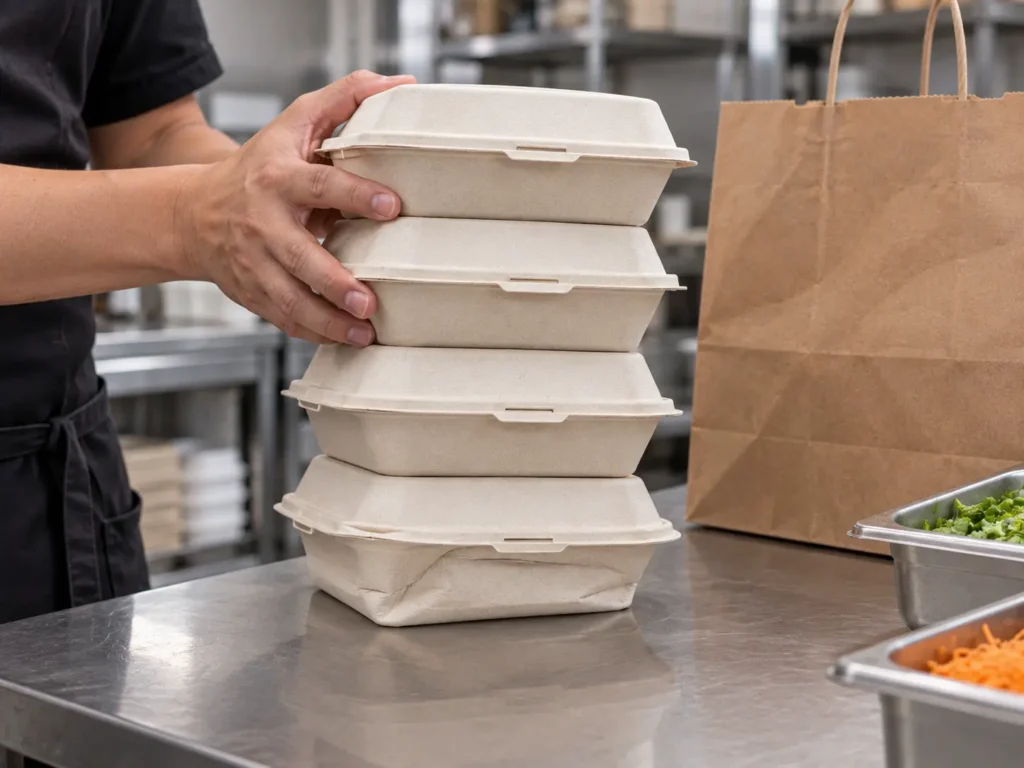
Heavy Stacking Can Crush the Bottom Container
The lowest package carries the weight of everything above it. Test the normal number of filled containers placed in one bag because empty stacking does not reproduce that pressure.
Test Time Too Short
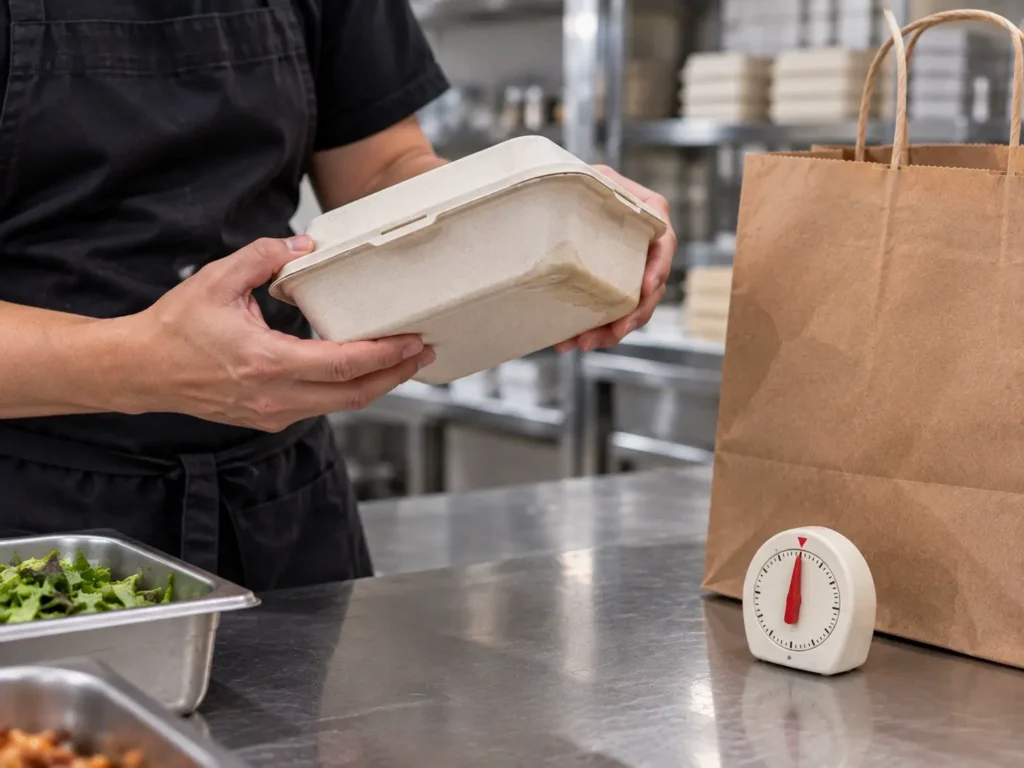
The Test Is Shorter Than the Actual Delivery
Checking the package for only a few minutes does not show what happens during a longer delivery. Test it for the usual delivery time and also check the longest delivery time your customers normally experience.
How Should Custom Food Delivery Packaging Be Planned?
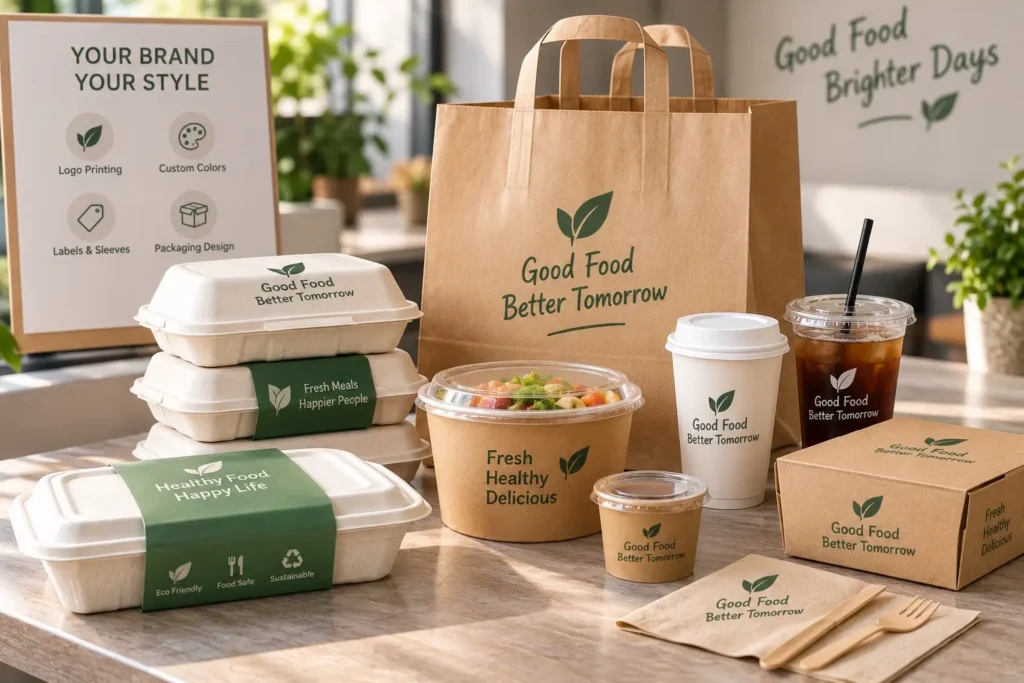
Plan custom branding after the selected container, lid and delivery bag have been tested with a complete packed meal.
Depending on the product, possible branding options can include printed food boxes, paper cups, paper bags, labels, sleeves, wrappers or outer cartons.
Artwork must fit the actual package. Box folds, closing tabs and bag handles may cover part of a design, so the layout must be adjusted for each product while the logo, colors and wording remain consistent.
Food Delivery Packaging Questions
Not necessarily. Delivery adds time, movement and stacking. Test the selected container with the actual food, matching lid and delivery bag for the normal delivery time.
Fill the bowl with the normal amount of soup, attach the matching lid and carry it upright inside the usual delivery bag. After the normal delivery time, check the top edge, lid and position of the bowl inside the bag.
This depends on the products, delivery time and way the bag is packed. Test the complete packed meal and check whether the cups stay upright, the food still looks right and the customer can remove each item easily.
Branding options depend on the selected product and available printing area. Printed boxes, cups, bags, labels, sleeves and outer cartons can be discussed after the container, lid and bag have been confirmed.