


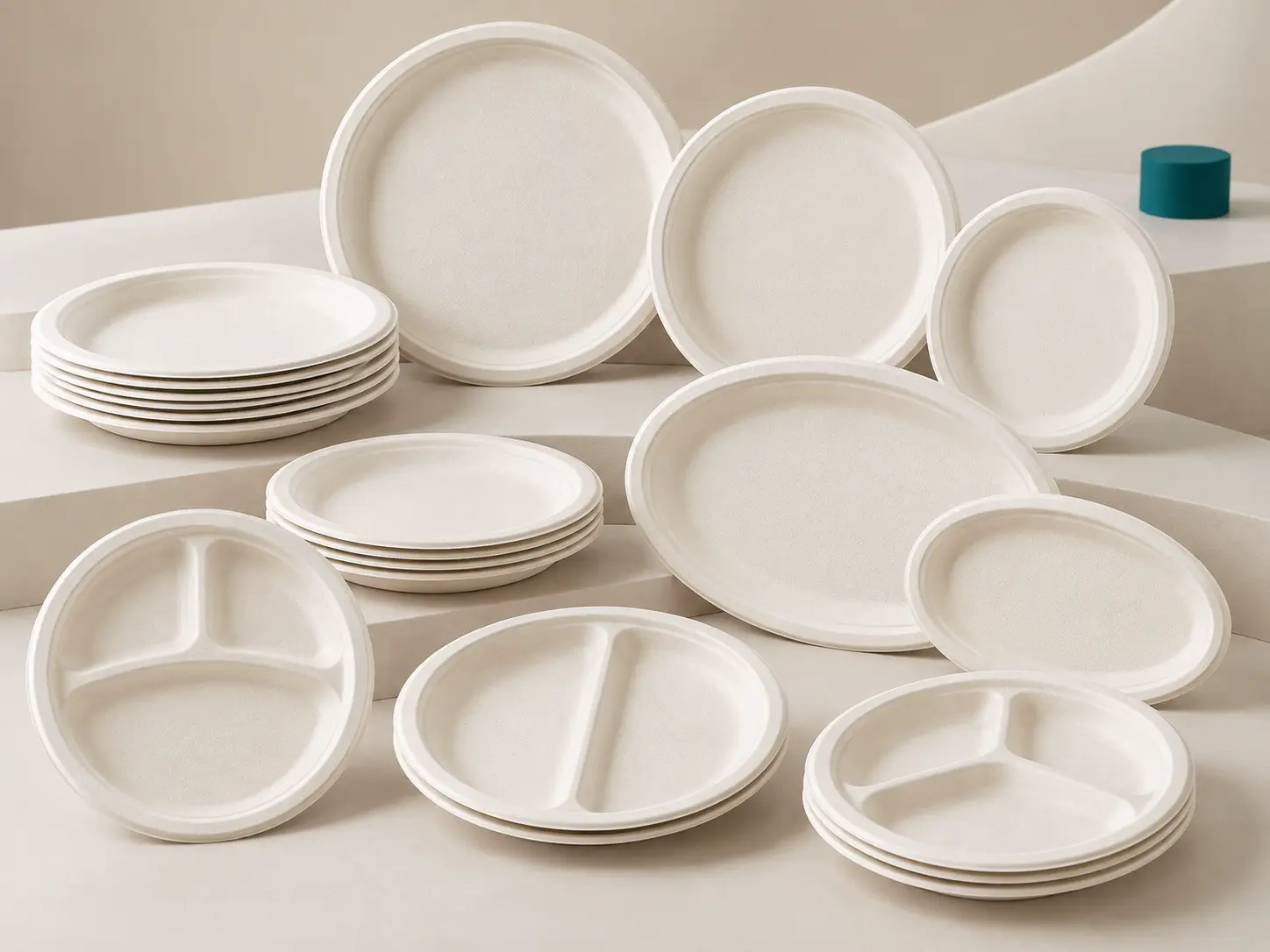
Piatti in bagassa
Round, square, oval and divided plates for snacks, desserts and full meals. Compare plate size, shape, edge design and number of sections.
View Bagasse Plates

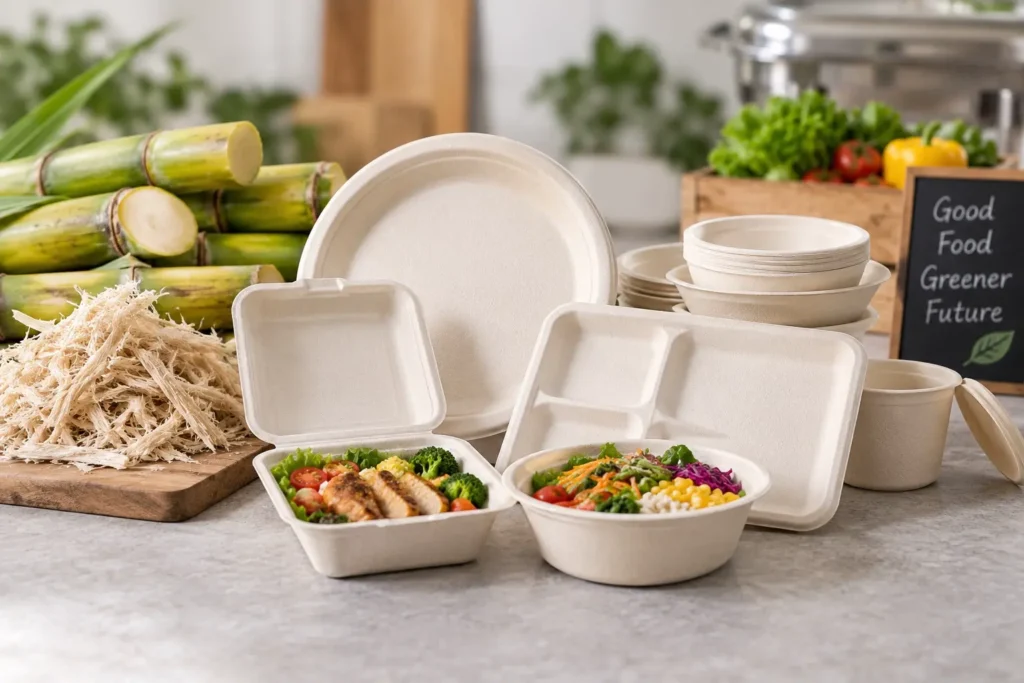
Bagasse is the plant fiber left after juice is extracted from sugarcane. Youshang manufactures this fiber into plates, bowls, food containers and trays for wholesale food packaging and foodservice supply.
We supply importers, packaging distributors, foodservice companies, restaurant groups, caterers, supermarkets and companies that sell products under their own brands. Customers can choose from existing sizes and shapes. Custom options may include a new shape, a logo formed into the product surface or branded packaging.
Choose a product category to view available sizes, shapes, capacities and numbers of sections.
Round, square, oval and divided plates for snacks, desserts and full meals. Compare plate size, shape, edge design and number of sections.
View Bagasse Plates →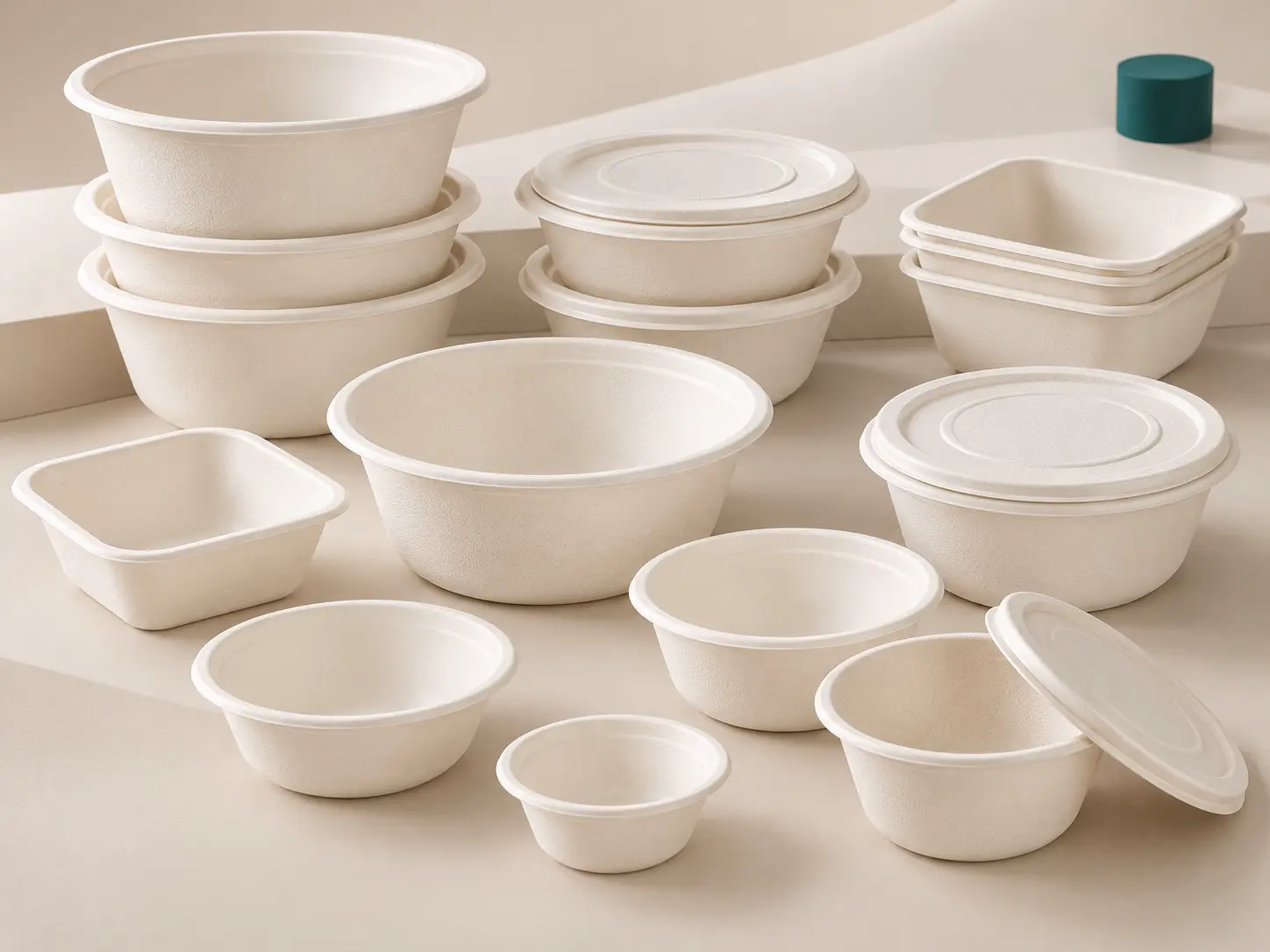
Round and square bowls for soup, salad, rice, noodles, cereal and desserts. Compare bowl capacity, depth and available lids.
View Bagasse Bowls →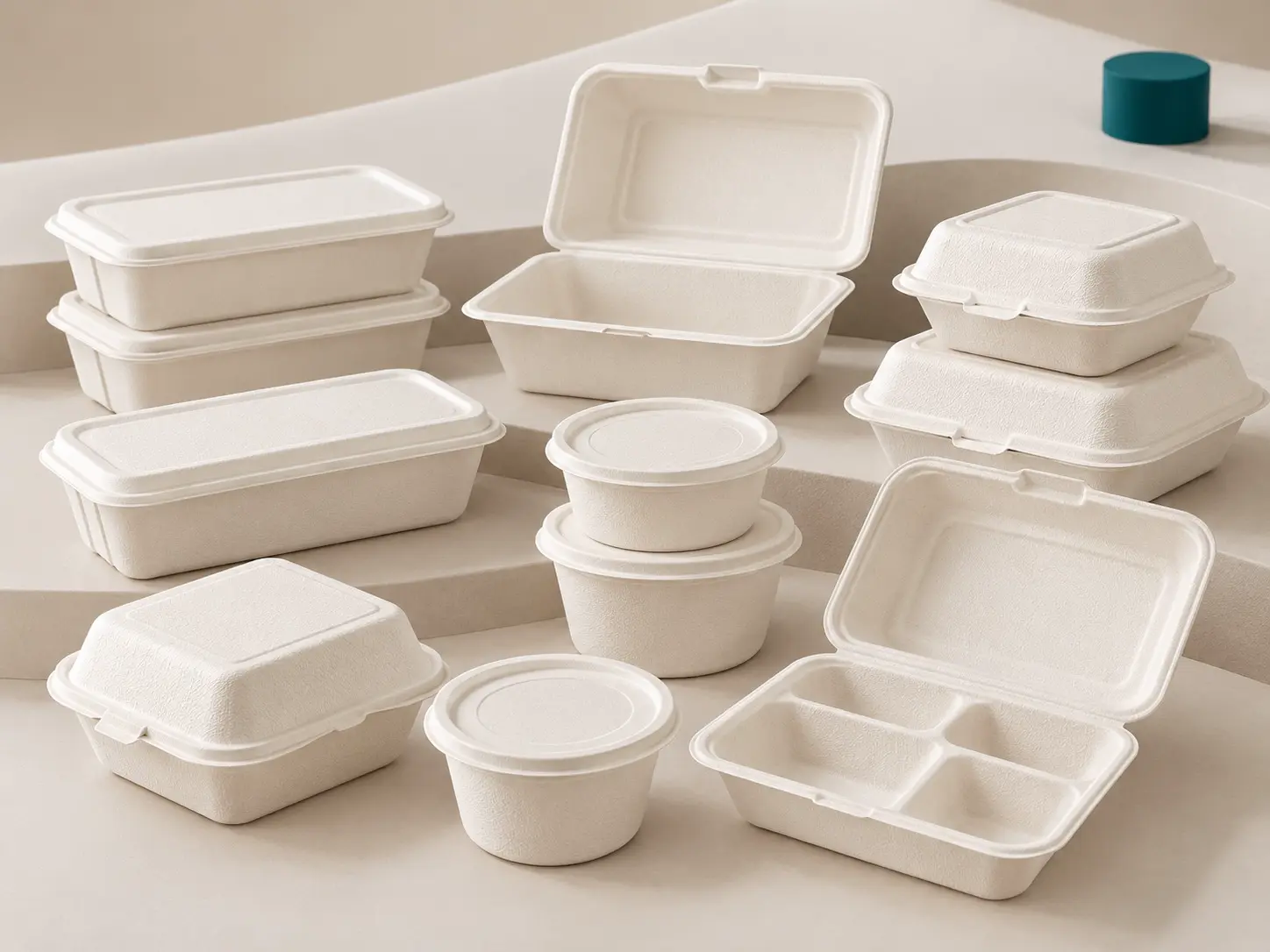
Takeaway boxes, burger boxes and divided meal containers, including one-piece boxes with attached lids. Compare capacity, number of sections and how the lid closes.
View Food Containers →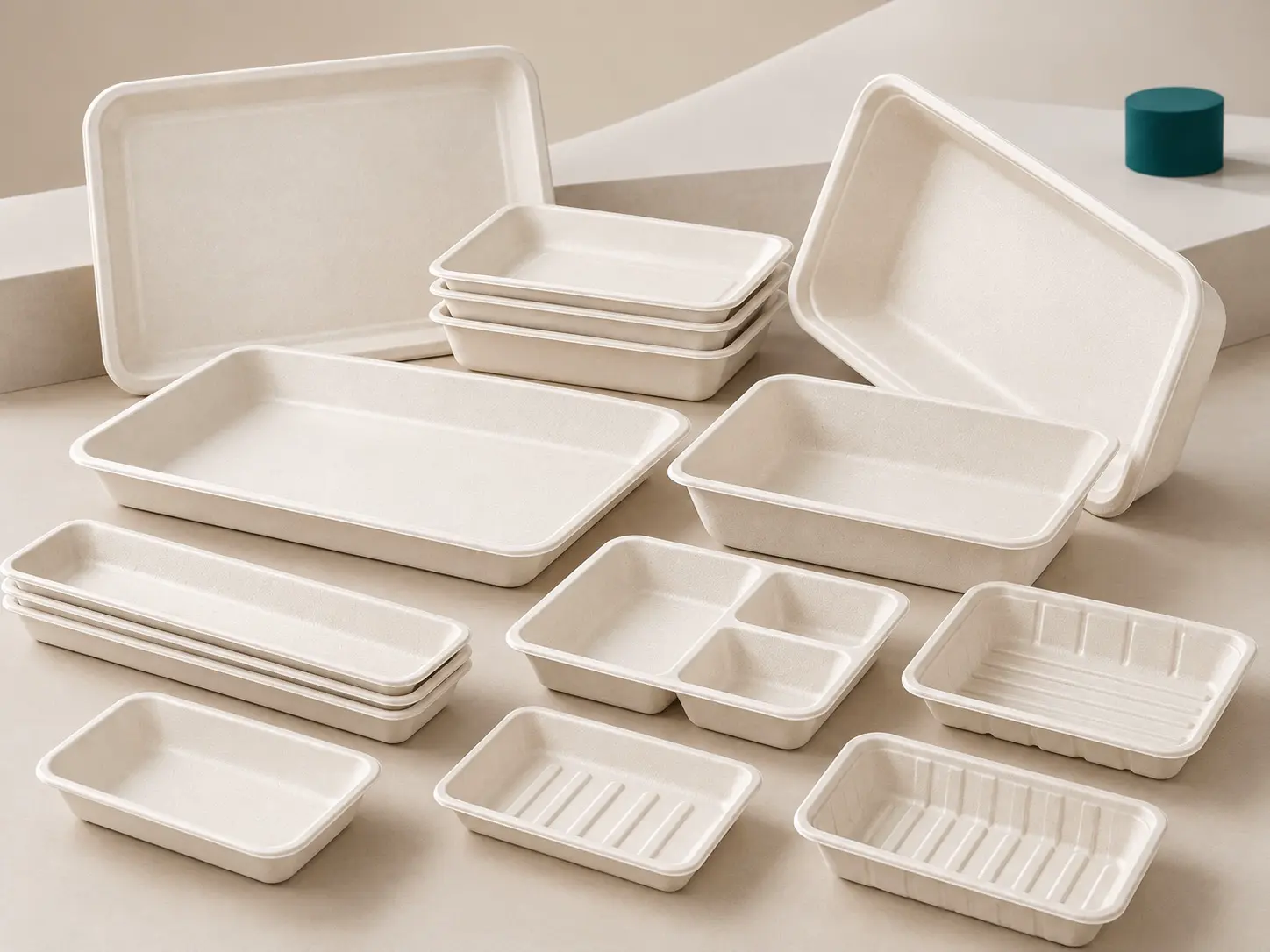
Single-section and divided trays for prepared meals, meat, fruit and catering. Compare length, width, depth and whether a lid or wrapping film is needed.
View Bagasse Trays →Use this guide to narrow down the right bagasse plate, bowl, food container or tray before requesting prices. Each section answers one practical purchasing question, from product type and portion size to lids, sample testing, custom options and quote comparison.
01 / Product Type
| Piatti in bagassa | Suitable for snacks, desserts and meals that do not need a lid. Check the diameter, shape and number of sections. |
| Ciotole di bagassa | Suitable for soup, rice, noodles, salad and desserts. Check the usable capacity, bowl depth and available lid. |
| Contenitori per alimenti | Suitable for takeaway meals, burgers and packed lunches. Check the space for food, lid style, closure and number of sections. |
| Vassoi in bagassa | Suitable for prepared food, meat, fruit and catering. Check the tray depth, stacking and whether the food will be covered. |
Non sai da dove cominciare? Send a photo of the packaging you currently use together with the food type and normal portion. This makes it easier to find the closest available option.
02 / Size and Capacity
Use your normal offering portion as the reference. Two products with the same stated size or capacity can provide different amounts of usable space.
| Plate | Compare the diameter and the flat area inside the rim. A wide rim can reduce the space available for food. |
| Bowl | Compare both capacity and depth. Confirm that a normal portion fits without filling the bowl too close to the top. |
| Food container | Check the inside length, width and depth. Leave enough space above the food so the lid can close without touching or pressing the meal. |
| Tray | Check the inside base as well as the outside dimensions. Confirm that the tray fits the display, delivery bag or outer carton used by your business. |
Semplice verifica delle dimensioni: Fill the sample with your normal portion. If the food reaches the rim, touches the lid or prevents proper closing, choose a deeper or larger product.
03 / Meal Layout
| One Section | Works well for a single dish, salad, noodles, rice dishes or meals that can share the same space. It usually provides more flexible room for different portion shapes. |
| Two Sections | Useful when a main item and one side dish should remain separate. Check whether each section is large enough for the planned portion. |
| Three or More Sections | Useful for set meals with several side dishes. More sections divide the total space, so compare the capacity of each section rather than the overall size alone. |
Important: A divider separates portions, but it may not stop thin sauce or liquid from moving between sections. Test the actual meal before ordering.
04 / Food Performance
Bagasse tableware is commonly used for hot and moist meals, but performance is not identical across every plate, bowl, container and tray.
Shape, depth, thickness, lid design, food type and holding time all affect the result. The safest way to confirm a product is to test it with the same food, portion and service conditions used by your business.
| Hot meals | Check whether the base and rim remain comfortable to handle and stable when the product is full. |
| Oily or saucy meals | Check for soft areas, surface changes and leakage during the normal time between packing and serving. |
| Soup or liquid food | Use a bowl or container designed for liquid food and test it upright with the matching lid. Do not assume that every closure is leakproof. |
| Takeaway and delivery | Check the filled container after normal carrying and stacking, not only while it is standing on a table. |
05 / Lids and Delivery
A lid is not automatically included with every bowl, tray or food container. Confirm the lid type, material, packing quantity and price for the exact product selected.
| Attached Lid | The lid and base are formed as one product. Check the hinge, locking points and the space above the food. |
| Separate Lid | The base and lid are separate pieces. Confirm that they are designed to fit each other and whether they are packed in the same or different cartons. |
| Tray Without a Lid | Some trays are used with wrapping film or placed inside another package. Check that the tray works with the covering method used by your business. |
Fit check: Check whether the lid opens, bends or allows sauce to escape.
06 / Sample Testing
Test samples with your real meal and daily working method. An empty product can show its shape, but it cannot confirm portion fit, lid closure or performance during delivery.
| Fill the Product | Use the food and portion normally served. Include sauce, oil or liquid if it is part of the meal. |
| Close or Cover It | Check the rim, hinge and locking points. |
| Wait the Normal Holding Time | Leave the filled product for the usual time between packing and serving. This shows whether heat, oil or moisture changes the product. |
| Carry and Stack It | Place it in the delivery bag or outer package normally used. Check whether the base, rim or lid bends under normal handling. |
You do not need a formal specification. Share what you know, and we will confirm any missing details before preparing the quote.
Share the product type, approximate size or capacity, lid or section needs, or send a reference photo.
Tell us what food or drink it will hold and whether it is for dine-in, takeaway, delivery, retail or catering.
Add the estimated quantity for each product and any requirements for printing, branded packing or carton marks.
Provide the destination country or port and tell us when you expect to receive the order.
Send a photo of the product you currently use or tell us the food type and normal portion size. We can then check which available products are the closest match.
This depends on the minimum order quantity for each product, packing method and production schedule. Send the product list and estimated quantities so the order can be reviewed.
Not usually. Changing a bag, label or carton does not change the tableware itself. A new mold may be needed when the product size, shape, depth or section layout changes.
Lid options vary by product. Some containers have an attached lid, while some bowls and containers use a separate lid. Availability, packing quantity and price must be checked for the selected product.
They are confirmed after the product, quantity, packing method, shipping terms and any custom changes have been reviewed.