



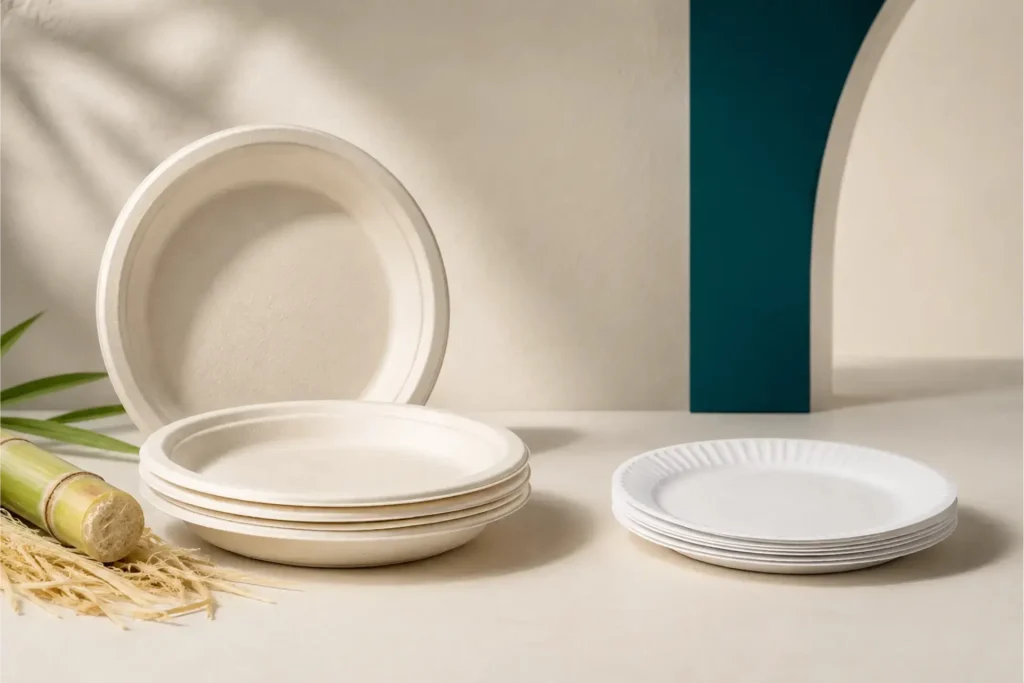
Usually, yes. A well-made sugarcane plate is generally stronger than a conventional thin paper plate, especially when it carries a full meal or comes into contact with hot, moist or oily food.
The difference does not come from the word “sugarcane” alone. It comes mainly from the way the plate is formed. Sugarcane plates usually have a molded three-dimensional structure. Their base, sidewall and raised rim work together to support the food.
Most basic paper plates are thinner and flatter. They work well for cake, bread, snacks and other light foods. They may bend more easily when they carry rice, meat, pasta or food with sauce.
However, not every sugarcane plate is stronger than every paper plate. A thick, heavy-duty paperboard plate may perform better than a lightweight or poorly formed sugarcane plate. Plate size, material weight, rim shape and manufacturing quality all affect the result.
The most accurate answer is that molded sugarcane plates usually offer better rigidity and load support than standard thin paper plates of a similar size.
Why Is the Comparison Not Always Simple?
The term “paper plate” covers several different types of products.
A basic paper plate may consist of a thin sheet of pressed paper. A heavier version may use thicker paperboard. Some paper plates also have a surface treatment that helps resist water or grease.
Sugarcane plates also come in different quality levels. Manufacturers can change the amount of fiber, molded depth, rim width and base structure. Two sugarcane plates with the same diameter may not have the same stiffness.
A five-inch dessert plate also faces a very different load from a ten-inch dinner plate. The smaller plate may only hold cake or fruit. The larger plate may carry rice, vegetables, meat and sauce at the same time.
Food type makes another important difference. Dry snacks place little stress on a plate. Hot and moist food creates a more difficult condition. A fair comparison should therefore consider products of a similar size that are intended for the same type of meal.
What Does Plate Strength Actually Mean?
People often judge a disposable plate by holding an empty sample. An empty plate may feel firm and still perform poorly after food is added.
Plate strength includes several forms of performance. The base must support the weight of the meal. The rim must remain stable when someone lifts the plate. The material must also keep enough stiffness after contact with moisture and oil.
Base Rigidity
The base carries most of the food.
If the base is too flexible, the center of the plate may sag under a heavy portion. The user may need to support it with both hands or place a second plate underneath it.
This problem becomes more noticeable as the plate becomes larger. A wide dinner plate has more unsupported space across its center than a small dessert plate. It therefore needs enough material and structural depth to spread the load.
The shape of the base also matters. Molded curves, raised sections and changes in depth can improve rigidity. A completely flat and thin base is more likely to bend.
Rim Stability
Most people lift a disposable plate by holding its rim. The rim must transfer the weight of the food without folding.
A raised or rolled edge can make a plate easier to hold. A wider rim may also spread the force across a larger area. However, rim width should remain in proportion to the plate because an oversized rim reduces the space available for food.
Sugarcane plates often have a thicker, molded edge. Standard paper plates commonly use a shallow fluted edge. Both designs can work, but a deeper molded rim usually provides more structural support.
Wet Strength
Both sugarcane plates and paper plates are fiber-based products. Moisture can affect the stiffness of cellulose fibers.
Research into the properties of paper fibers has found that increasing moisture can reduce their hardness and stiffness. Molded pulp performance also varies with fiber type, density, pressure and moisture conditions. These factors are discussed in scientific research on the mechanical and moisture-related properties of molded pulp.
A dry paper plate may feel firm at first. It may become softer after holding pasta, cooked vegetables, fruit or gravy for a longer period.
Sugarcane plates are not completely unaffected by moisture. A bagasse plate can also soften during extended contact with wet food. Its molded structure often allows it to retain more usable rigidity than a thin paper plate during a normal meal.
Grease Resistance
Oil creates a different challenge from water.
Fried chicken, pizza, grilled meat and oily sauces can leave marks on fiber-based tableware. A surface mark does not always mean that the plate has failed. The more important signs are severe local softening, visible seepage or oil reaching the underside.
Grease resistance depends on the finished product. The main fiber material does not provide the full answer. Plate density, surface treatment and manufacturing quality also affect performance.
Why Are Sugarcane Plates Usually Stronger?
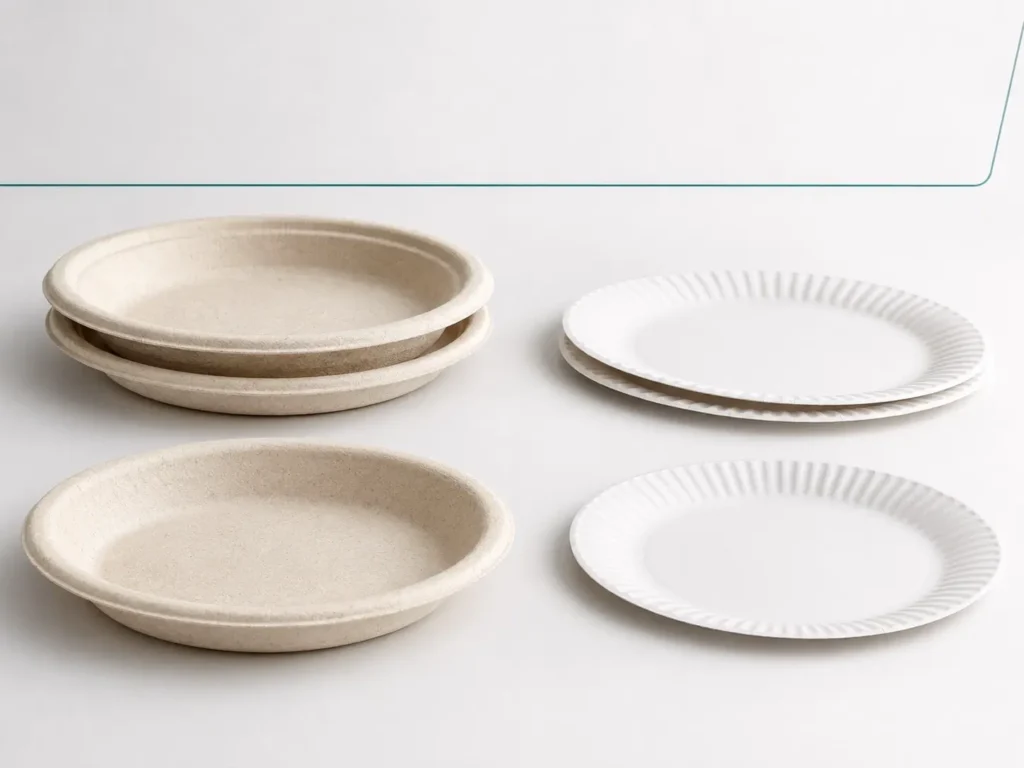
Sugarcane plates are commonly made from bagasse pulp. Bagasse is the fibrous material left after juice has been extracted from sugarcane.
Manufacturers process the fiber into pulp and form it inside a three-dimensional mold. The plate is then pressed and dried into its final shape. This process creates a single formed structure with a base, sidewall and rim.
A standard thin paper plate depends mainly on the stiffness of a relatively flat sheet. When the sheet bends or absorbs moisture, the whole plate may lose support.
A molded sugarcane plate uses its shape as well as its material. The raised rim and shaped base help spread the weight across the plate. The effect is similar to the way a folded sheet becomes more rigid than the same sheet when it remains completely flat.
Molded fiber is not automatically strong in every form. Scientific reviews of molded pulp packaging show that mechanical performance can change with fiber properties, density, forming conditions and product geometry.
For this reason, the structural design of the finished plate matters as much as the source of the fiber.
How Do Sugarcane and Paper Plates Perform With Different Foods?
The practical difference becomes clearer when the two plate types are used with real meals.
| Food application | Sugarcane plate | Conventional thin paper plate |
|---|---|---|
| Cake and dry snacks | Strong enough, but often more support than the food requires | Usually suitable |
| Bread and pastries | Keeps its shape well | Usually suitable |
| Sandwiches and light lunches | Provides firm support | Often suitable for mostly dry portions |
| Rice, pasta and vegetables | Molded base usually supports a full portion well | May bend under a large serving |
| Fried or oily food | Can perform well when the finished plate has adequate grease resistance | Performance depends heavily on paper weight and surface treatment |
| Food with gravy or sauce | Usually stays firmer than thin paper during normal serving | May gradually soften |
| Large catering meals | Dinner and compartmented formats can provide good support | A heavy-duty paperboard plate may be needed |
| Soup or liquid-heavy food | A bowl or deep container should be used | A bowl or deep container should be used |
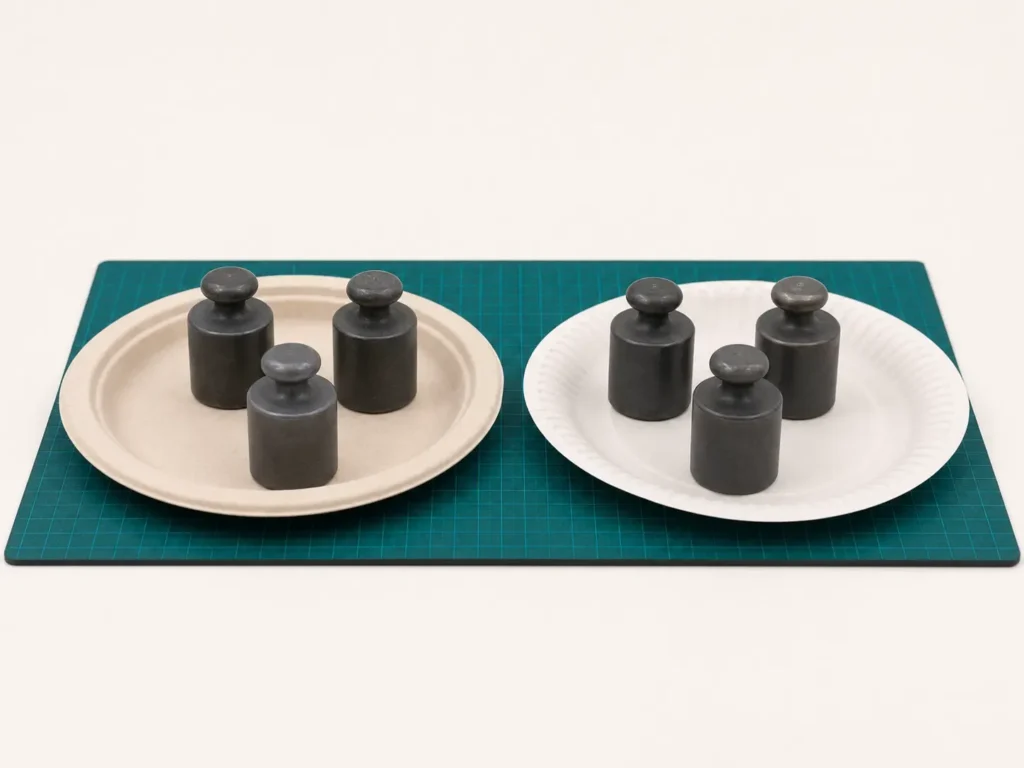
A sugarcane plate remains a plate. Its stronger structure does not make a flat plate suitable for soup or a large amount of liquid.
A small amount of sauce or gravy may be suitable for a deeper plate. Soup, broth and liquid-heavy curry need a bowl or food container. Readers can learn more in Can Bagasse Bowls Hold Liquid?.
What Affects the Strength of a Sugarcane Plate?
A sugarcane plate can only perform as well as its finished structure allows. Several physical factors influence its strength.
Plate Size
Larger plates need to spread weight across a wider area.
A small dessert plate may feel very firm because its base has little unsupported space. A ten-inch dinner plate needs a stronger structure to provide the same level of support when it carries a full meal.
This does not mean that a larger plate is weaker. Its material weight, rim and molded base must match its diameter.
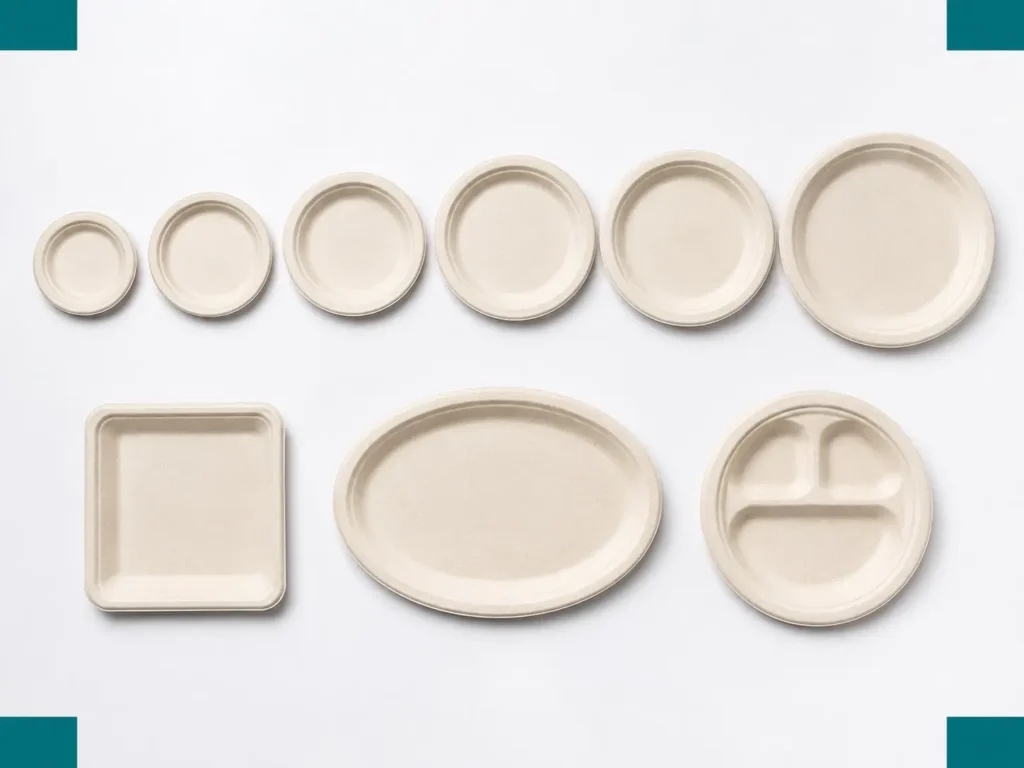
Youshang’s current sugarcane plate range includes round plates from 5 to 10 inches, as well as square, oval and compartmented designs. The smaller sizes are suitable for desserts, snacks and side dishes. The larger formats are designed for main meals, catering and buffet service.
Different shapes also distribute food weight in different ways. A compartment plate needs enough rigidity around each divided section, while an oval plate must support food across a longer base.
Material Weight and Thickness
A thicker plate often feels more rigid, but weight alone does not guarantee strength.
The fiber must be distributed evenly. A heavy plate may still have weak areas if part of the base or rim is unusually thin. A lighter plate can perform well when its material is placed efficiently and its shape provides enough support.
Plate weight is therefore one useful indicator, but it should not be treated as the only measure of quality.
Rim and Base Design
The plate’s geometry controls how forces move through the product.
A raised edge helps the rim resist folding. A shaped base can reduce bending across the center. Molded transitions between the base and sidewall can also help distribute the load.
Very sharp corners, incomplete edges and uneven sections may create weak points. A consistent shape usually produces more predictable performance.
Fiber Distribution and Forming Quality
Molded pulp contains many individual fibers that bond together as the plate is pressed and dried.
Uneven fiber distribution can leave thin or weak areas. Cracks, incomplete edges and poorly formed sections may also reduce strength.
Density matters as well. A denser structure may provide better stiffness, but the final result still depends on the fiber type, forming pressure and plate geometry.
Heat, Moisture and Contact Time
Heat is often present together with steam, sauce or oil. These conditions can gradually affect fiber-based products.
A plate used for a quick meal may remain firm throughout service. The same plate may become softer if hot and moist food remains on it for a much longer period.
Contact time therefore matters. A plate that works well for normal restaurant service may not behave exactly the same way during a long buffet or catered event.
This applies to both sugarcane and paper plates. The difference is that a molded sugarcane plate often begins with greater structural depth and may keep more usable support as the fibers become moist.
When Is a Paper Plate Strong Enough?
A sugarcane plate is not necessary for every food application.
A standard paper plate is often suitable for cake, bread, biscuits, fruit slices and other light, dry foods. These foods do not place much weight, moisture or grease on the plate.
Paper plates can also be useful at short events where food is served and eaten quickly. Their light weight and simple design may be all that the application requires.
Heavy-duty paperboard plates can support larger meals. Their performance depends on paper thickness, shape and surface treatment. Some premium paper plates may be stronger than lightweight molded-fiber products.
Sugarcane plates show their clearest advantage with full meals and foods that are hot, oily or moderately moist. Their deeper molded structure usually gives the user more confidence when lifting and carrying the plate.
Frequently Asked Questions
Are bagasse plates strong?
Yes. Well-formed bagasse plates usually provide enough rigidity for full meals and common foodservice applications. Their strength depends on plate size, material weight, fiber distribution and molded design.
Are sugarcane plates stronger than paper plates?
Sugarcane plates are generally stronger than conventional thin paper plates of a similar size. A heavy-duty paperboard plate may perform differently, so the answer depends on the construction of both products.
Do sugarcane plates become soft?
Sugarcane plates can become softer after long contact with hot or wet food because they are fiber-based. A properly formed plate should retain enough strength for its intended serving period.
Can sugarcane plates hold oily food?
They can hold oily food when the finished plate has suitable grease resistance. Fried food and oily sauces create more demanding conditions than bread, cake or dry snacks.
Can sugarcane plates carry heavy meals?
A suitable dinner plate can carry rice, meat, vegetables and other parts of a full meal. The plate must have the right diameter, material weight and structural design for the portion.
Can sugarcane plates hold sauce?
A deeper sugarcane plate can usually hold food with a moderate amount of sauce or gravy. Soup and meals containing a large amount of liquid should be served in a bowl or deep container.
Are all sugarcane plates equally strong?
No. Sugarcane plates vary in thickness, weight, density, fiber distribution and shape. The material name does not guarantee the same performance across every product.
Conclusion
A molded sugarcane plate has more structural depth. Its base, sidewall and raised rim work together to support the food. This design usually provides better rigidity when the plate carries a full, hot, oily or moderately moist meal.
However, the material name alone does not determine strength. Plate size, thickness, fiber distribution, rim design and forming quality also affect performance. A heavy-duty paperboard plate may be strong enough for many applications, while a lightweight sugarcane plate may provide less support than expected.
Paper plates remain practical for cake, bread and other light, dry foods. Sugarcane plates provide a clearer advantage when a meal places more weight, heat or moisture on the plate.
Qingdao Youshang Packaging Products Co., Ltd. supplies molded sugarcane tableware for foodservice, wholesale and private-label applications. Youshang’s plate range includes round, square, oval and compartmented formats for different serving needs.
Businesses looking for current sizes and product specifications can explore Youshang’s sugarcane bagasse tableware or contact the Youshang team.