

Yes, bagasse bowls can hold soup, curry, sauces and other liquid-based foods during normal foodservice and takeaway use. Their performance depends on the bowl structure, fiber density, surface treatment, food temperature and holding time. Buyers should test the selected bowl with their actual food before placing a bulk order.
This short answer does not mean that every bagasse bowl performs in the same way. It also does not mean that a molded fiber bowl can store liquid for an unlimited time.
A bowl used for a cold salad does not face the same conditions as a bowl used for hot soup. A bowl used for immediate service also has different requirements from one used for a one-hour delivery.
Buyers should look beyond the material name. They should check the product specification, lid, food type and expected use. This guide explains how bagasse bowls hold liquid and what buyers should confirm before ordering.
What Is a Bagasse Bowl?
A bagasse bowl is a molded fiber food container. Manufacturers process sugarcane residue into pulp and form the bowl under controlled heat and pressure.
The term bagasse refers to the fibrous material left after sugarcane stalks are crushed to extract their juice. This fiber can be processed into pulp and used to make plates, bowls, trays and takeaway food containers.
The finished bowl normally has a firm body and a visible plant-fiber surface. Its performance does not depend on the raw material alone. The mold design, product weight, wall thickness, pressing process and surface treatment also affect the finished bowl.
Two bagasse bowls can look almost identical but perform differently with hot soup or oily food. Buyers should treat “bagasse bowl” as a product category, not as one fixed specification.
How Well Do Bagasse Bowls Hold Liquid?
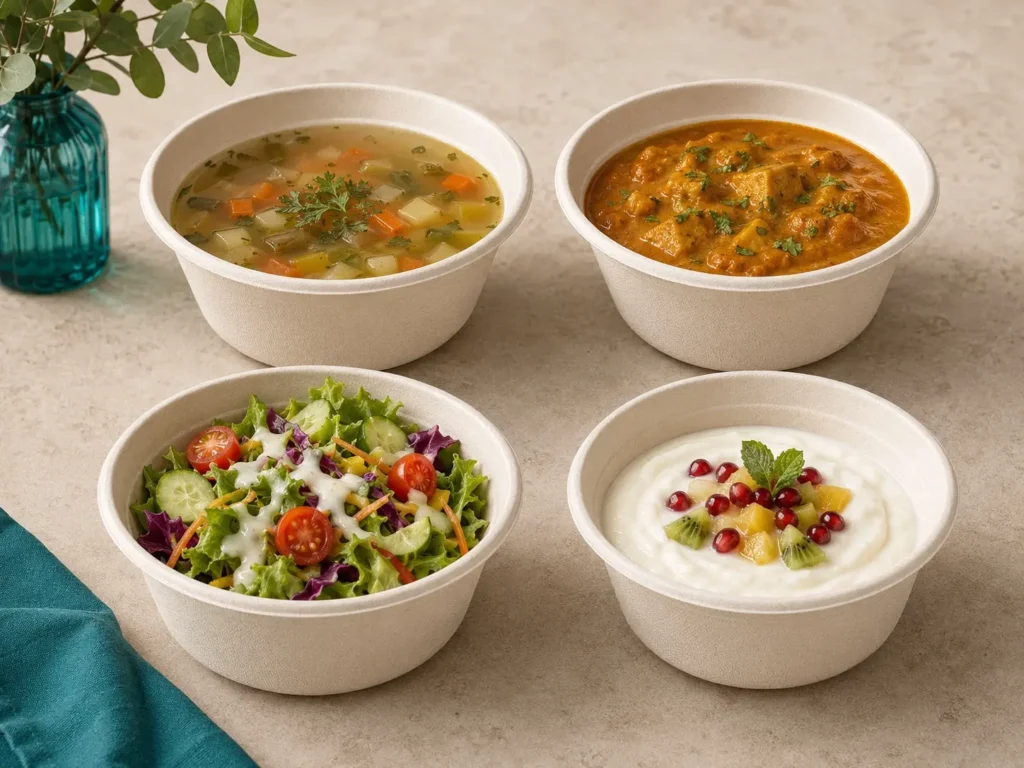
Bagasse bowls can hold many liquid and semi-liquid foods during normal serving and takeaway periods. Common examples include soup, curry, porridge, noodles with broth, yogurt, salad dressing and meals with sauce.
A suitable bowl should maintain its shape during the expected holding time. The bottom should remain stable. The sidewall should not collapse during normal handling. The rim should also remain firm enough to support the lid.
The result can change when the liquid is very hot, thin or oily. It can also change when the food stays in the bowl for a long time.
A thick curry does not create the same conditions as a clear broth. Cold yogurt also places less heat stress on the bowl than hot soup. Buyers should define the actual food before comparing bowl specifications.
What Types of Liquid Can Bagasse Bowls Hold?
Bagasse bowls can be used for several liquid-based foods, including:
- Hot and cold soup
- Curry and stew
- Noodles with broth
- Porridge and oatmeal
- Yogurt and desserts
- Salad with dressing
- Rice dishes with sauce
- Side dishes with gravy
The correct choice depends on the amount of water, oil and heat in the food. A small amount of dressing is easier to manage than a full bowl of hot broth.
The expected holding time also matters. A restaurant may serve the food within a few minutes. A delivery business may need the bowl to remain stable for an hour or longer.
Are Bagasse Bowls Waterproof?
Bagasse bowls are normally designed to resist moisture during their intended foodservice use. However, “water resistant” and “waterproof” do not mean the same thing.
Water resistance means that the bowl can slow down liquid absorption and keep its structure for a practical period. Waterproof means that water cannot pass through the material under the stated conditions.
Suppliers should not describe every bagasse bowl as completely waterproof under all temperatures and holding times. The result depends on the bowl specification, liquid temperature, contact time and surface treatment.
Buyers should ask for clear use conditions instead of relying on one general claim.
Are Bagasse Bowls Leakproof?
A suitable bagasse bowl can provide good resistance to liquid during normal foodservice use. However, the bowl is only one part of the complete package.
The lid and rim are also important. A secure lid can reduce spills during transport. A loose lid can fail even when the bowl body remains dry.
The buyer should test whether the lid fits correctly before and after the bowl is filled. The test should also include gentle tilting, stacking and normal delivery movement.
The word “leakproof” should always be linked to a specific condition. The condition should include the liquid type, temperature, holding time and transport method.
Can Bagasse Bowls Hold Hot Soup?
Bagasse bowls can be suitable for hot soup when the product has been designed and tested for that use. The buyer should still confirm the soup temperature, oil content, holding time and lid.
Hot liquid can affect molded fiber more quickly than cold food. Heat can increase moisture absorption. Oil can create another challenge. A thin and oily soup may require better resistance than thick porridge served at a lower temperature.
The bowl also needs enough strength for handling. A customer may lift it with one hand. A delivery worker may stack several bowls inside one bag. The lid may also place pressure on the rim.
Buyers should not choose a soup bowl by capacity alone. Two 12oz bowls can have different weights, wall shapes and rim designs.
Youshang recommends testing the actual soup at the intended serving temperature. The test should use the matching lid and the expected delivery time.
Does Hot Liquid Make a Bagasse Bowl Soft?
Hot liquid can make an unsuitable bagasse bowl softer over time. The result depends on the liquid temperature, bowl thickness, fiber density, surface treatment and holding time.
The bottom and lower sidewall usually face the longest contact with liquid. Buyers should check these areas during testing. They should also check whether the rim changes shape after the bowl is filled.
A small amount of softening does not always cause product failure. The key question is whether the bowl remains safe and practical during its intended use.
The bowl should still support the food. It should remain comfortable to hold. It should also keep a suitable lid in place.
Does Oil Affect a Bagasse Bowl?
Oil can affect molded fiber differently from plain water. Foods such as curry, meat sauce and oily soup contain both moisture and fat. This combination can make the application more demanding.
The buyer should check whether oil marks appear on the outside of the bowl. The buyer should also check whether the bottom becomes soft or whether the sidewall loses strength.
A short restaurant service period and a long delivery period can produce different results. The test should copy the longest realistic use condition.
For oily or sauce-based meals, Youshang asks buyers to provide the food type, serving temperature and expected holding time. This information helps the team recommend a more suitable bowl for sample testing.
Can Bagasse Bowls Hold Cold Liquids?
Bagasse bowls can also be used for cold soup, yogurt, fruit, salad, desserts and other chilled foods. Cold food normally places less heat stress on the bowl.
Cold use can still create moisture. Condensation may form on the outside when a chilled product enters a warm room. A refrigerated product may also stay in contact with the bowl for much longer than a freshly served meal.
The buyer should test both the food and the storage process. The test should cover refrigeration time, display time and transport time. It should also check the bottom of the bowl after removal from refrigeration.
A bowl that works well for immediate salad service may not be suitable for overnight retail display.
Can Bagasse Bowls Be Used for Refrigerated Food?
Some bagasse bowls can be used for refrigerated food when the product specification supports that application. Buyers should not assume that refrigeration performance is the same for every bowl.
The test should include the intended food, actual storage temperature and expected storage time. The buyer should also check the lid after refrigeration.
Condensation can affect labels, cartons and secondary packaging even when the bowl remains stable. Retail buyers should test the complete package, not only the bowl.
How Long Can Bagasse Bowls Hold Liquid?
There is no single holding time for every bagasse bowl and every liquid.
A restaurant may only need the bowl to hold soup from the kitchen to the table. A takeaway business may need 30 to 60 minutes. A delivery company may need a longer period and more stacking strength.
The actual time depends on the following conditions:
| Factor | Why it matters |
|---|---|
| Liquid temperature | Higher temperatures can increase stress on the fiber structure. |
| Water content | Thin liquids may reach weak areas more easily. |
| Oil content | Oil can affect the bowl differently from plain water. |
| Bowl weight | Product weight can affect structure, but weight alone does not prove performance. |
| Wall thickness | Thin areas may soften before the rest of the bowl. |
| Surface treatment | Treatment can affect resistance to moisture and grease. |
| Holding time | Longer contact gives the liquid more time to affect the material. |
| Lid fit | A poor lid can cause spills even when the bowl performs well. |
| Transport conditions | Tilting, stacking and vibration can expose weak points. |
Buyers should state the expected holding time when requesting a quotation. The supplier can then recommend a relevant product and test method.
Are Bagasse Bowls Suitable for Long-Term Liquid Storage?
Bagasse bowls are mainly designed for foodservice, takeaway and short-term food packaging. They should not automatically be treated as long-term liquid storage containers.
Long-term storage creates different demands. The food may stay in contact with the material for many hours or days. Refrigeration, condensation and food chemistry may also affect the result.
Buyers who need retail storage should explain the complete use condition. They should include the filling process, storage temperature, shelf time and closure requirement.
Does a Bagasse Bowl Need a Lid?
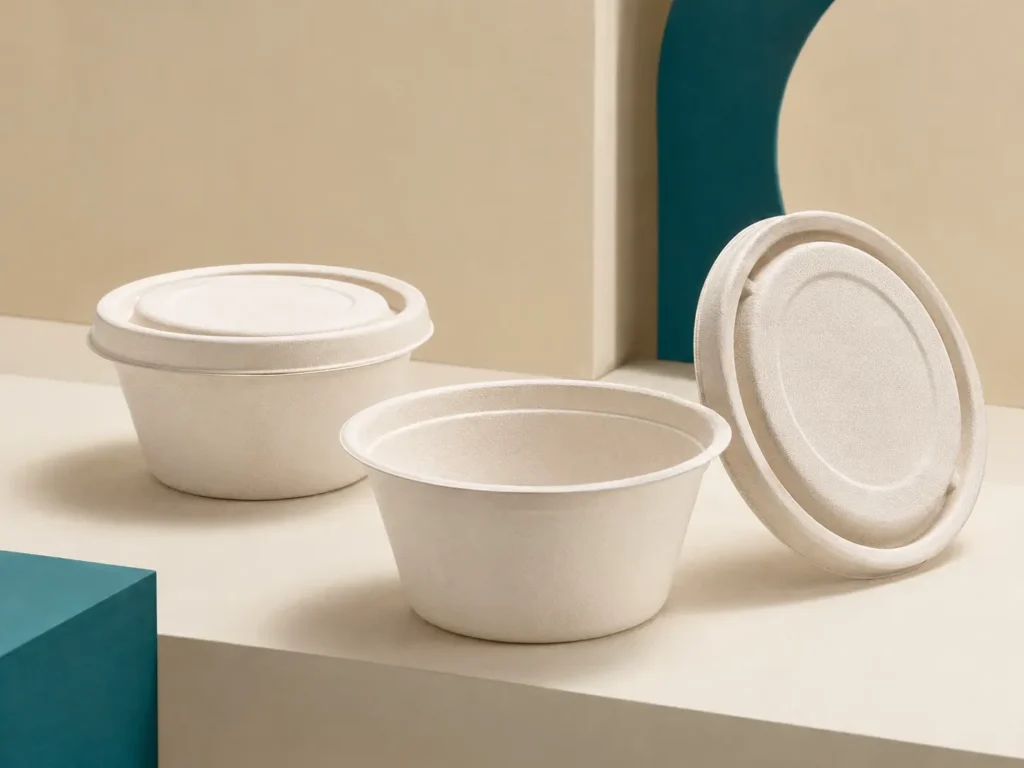
A bagasse bowl does not always need a lid. The need depends on the food and sales channel.
| Application | Lid recommendation |
|---|---|
| Dine-in soup | Usually optional |
| Takeaway meals | Recommended |
| Food delivery | Strongly recommended |
| Catering buffet | Depends on the service method |
| Cold food display | Confirm storage and display needs |
| Retail prepared food | Confirm sealing, labeling and stacking |
The lid material may differ from the bowl material. Buyers should confirm the specifications of both parts.
Buyers should also confirm whether bowls and lids are packed together or supplied separately. This detail can affect warehouse management, packing work and purchasing cost.
How Should Buyers Check the Lid Fit?
The buyer should fill the bowl with the intended food and attach the matching lid. The buyer should check whether the lid closes evenly around the full rim.
The buyer should then lift and move the package. A gentle tilt can help identify gaps. A stacking test can show whether pressure causes the lid to loosen.
The buyer should repeat the test with hot food if the bowl will hold hot soup. Heat may affect the rim and closure.
A capacity label does not guarantee lid compatibility. Two 12oz bowls may use different rim diameters and lid structures.
Can Bagasse Bowls Be Stacked for Delivery?
Bagasse bowls can be stacked when the bowl and lid have been designed for that purpose. The complete package must remain stable during movement.
The buyer should test the expected number of bowls in one delivery bag. The lower bowl must support the weight above it. The lid should not bend into the food.
The delivery test should include normal movement and short transport. It should also check whether the package slides or tilts inside the bag.
Can You Microwave a Bagasse Bowl With Liquid Inside?
Some bagasse bowls are designed for short microwave reheating. Buyers should check the specification of the exact product before making a microwave-safe claim.
Youshang’s current 12oz sugarcane bagasse bowl specification lists microwave use and a stated temperature range of -20°C to 120°C. These details apply to that product specification. They should not be copied to every bowl without confirmation.
Microwave performance also depends on the food. Water, oil and sugar heat at different rates. Thick food may heat unevenly. The food may become much hotter than the outside of the bowl suggests.
Buyers should define the expected microwave time and power level. They should then carry out a controlled sample test.
Should the Lid Be Removed Before Reheating?
The lid should be checked separately from the bowl. A bowl may be suitable for microwave reheating while its lid is not.
Some packages require the lid to be removed. Other lids may need to be loosened to release steam. Buyers should follow the confirmed product instructions.
The final instructions should match the bowl, lid and intended food. Buyers should not use one general microwave claim for different product combinations.
What Bagasse Bowl Size Should You Choose?
The correct capacity depends on the food portion and required headspace.
A 12oz bowl represents a nominal capacity of about 350ml. The practical filling volume may be lower. Soup needs space below the rim, especially during delivery.
An overfilled bowl has a higher spill risk. It may also prevent the lid from closing correctly.
A smaller bowl may suit desserts, side dishes and small soup portions. A medium bowl may suit rice, noodles, salad and regular soup servings. A larger bowl may suit main meals, large salads and noodle dishes with broth.
The buyer should check both the nominal capacity and the recommended serving capacity.
Is a 12oz Bagasse Bowl Suitable for Soup?
A 12oz bagasse bowl can be suitable for a small soup portion, side dish, dessert, salad or light meal. The final choice depends on the serving volume and required space below the rim.
Buyers should fill the sample with the exact serving volume. They should not rely only on the stated capacity.
The opening diameter also matters. A wide bowl can improve presentation and make the food easier to eat. A deeper bowl can provide better control for liquid during transport.
Youshang recommends sending the serving volume, food weight and a reference photo with the inquiry.
How Should Buyers Test a Bagasse Bowl?
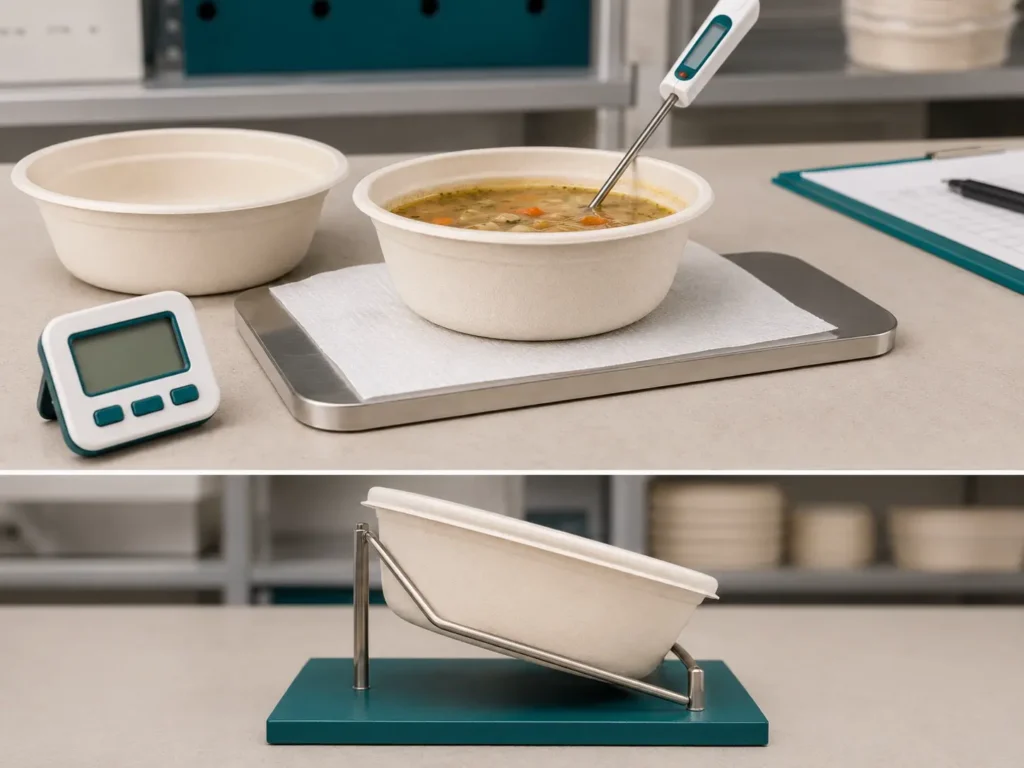
A useful test should copy the actual service conditions as closely as possible.
- Fill the bowl with the intended food or liquid.
- Record the filling temperature.
- Leave enough space below the rim.
- Attach the matching lid if the final package needs one.
- Keep the bowl filled for the expected serving or delivery time.
- Check the bottom, sidewall and rim for softening or marks.
- Tilt the closed package gently and inspect the closure.
- Stack several filled bowls if the delivery process requires stacking.
- Place the packed bowls in the usual delivery bag or carton.
- Repeat the test after microwave reheating if reheating is required.
The buyer should record the result. Photos and notes can help the supplier understand any problem.
The buyer should also test more than one sample. One successful sample does not prove production consistency.
What Should Bulk Buyers Confirm Before Ordering?
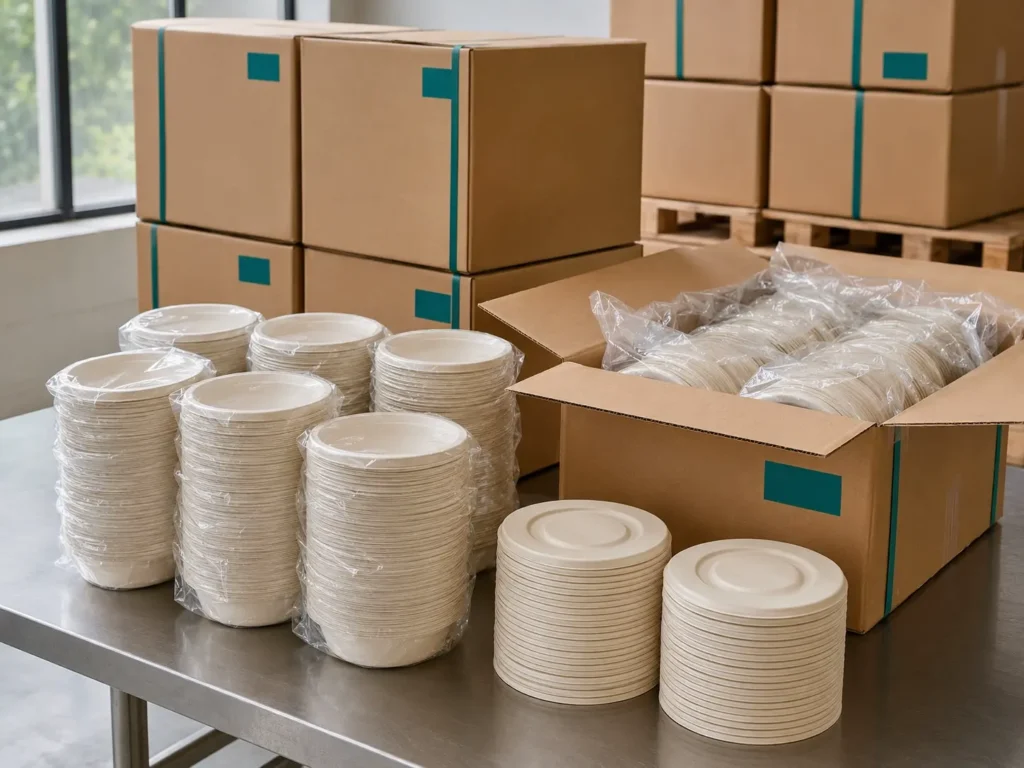
Bulk buyers need to confirm more than the bowl capacity and unit price.
Which Product Specifications Should Be Confirmed?
The buyer should confirm:
- Product name and model
- Material
- Capacity
- Top diameter
- Bottom diameter
- Bowl height
- Product weight
- Color
- Available lid
- Temperature conditions
- Microwave requirements
- Oil and moisture resistance
- Intended food application
These details should appear in the final specification or order confirmation.
Which Packaging Details Should Be Confirmed?
The packing specification should include the number of pieces per bag, bags per carton and total pieces per carton.
The buyer should also confirm the carton dimensions, net weight and gross weight. These numbers affect storage, shipping and landed cost.
A distributor may need private-label packaging, barcode labels or customized shipping marks. A restaurant group may prefer bulk packing. A retailer may need smaller sales packs.
Which Documents Should Buyers Request?
The required documents depend on the product and destination market.
Food packaging must meet the rules that apply in the country where it is sold. The U.S. Food and Drug Administration explains that food packaging and its components can fall within food-contact substance requirements.
The European Commission also requires food-contact materials placed on the EU market to follow its safety framework.
Buyers should request documents for the actual product and intended market. They should not assume that one general certificate covers every material, size and application.
How Youshang Supports Bagasse Bowl Buyers
Qingdao Youshang Packaging Products Co., Ltd. specializes in disposable pulp tableware and food packaging. The Youshang product range includes sugarcane bagasse plates, bowls, food containers, boxes and trays.
Youshang supports standard product supply, wholesale orders and custom packaging projects. The company reviews each inquiry according to the food type, capacity, temperature, holding time, delivery method and packing requirement.
This process helps buyers select a bowl for a real application instead of choosing from a product photo alone.
Buyers can review the wider sugarcane bagasse tableware range for related products.
For liquid food delivery, buyers should also consider the complete packaging system. The bowl, lid, label, bag and stacking method all affect the final result. Youshang can review these requirements as part of a food delivery packaging solution.
What Information Should You Send Youshang?
Buyers should provide the following information:
- Food type
- Serving temperature
- Required capacity
- Serving volume
- Expected holding time
- Delivery method
- Lid requirement
- Order quantity
- Packing requirement
- Destination country
Buyers can also send a sample, drawing, reference image or current packaging specification. The Youshang team can review the available product and customization needs before quotation.
Frequently Asked Questions
Can Bagasse Bowls Hold Soup?
Yes. A suitable bagasse bowl can hold hot or cold soup during normal serving and takeaway use. Buyers should confirm the bowl specification, soup temperature, oil content, holding time and lid fit.
Do Bagasse Bowls Get Soggy?
A bagasse bowl can soften when it stays in contact with hot or wet food for too long. The actual result depends on the bowl structure, surface treatment, liquid type and temperature.
Are Bagasse Bowls Suitable for Takeaway?
Yes. Bagasse bowls can suit takeaway meals when the bowl and lid match the food and delivery conditions. Buyers should test stacking, movement and expected delivery time.
Can Bagasse Bowls Hold Curry?
Bagasse bowls can hold many curry and sauce-based foods. Oil and heat can make the application more demanding, so buyers should test the actual curry before ordering.
Can Bagasse Bowls Go in the Refrigerator?
Some bagasse bowls can be used for chilled food. Buyers should confirm the product specification and test condensation, holding time and structural strength after refrigeration.
Are All Bagasse Bowls Compostable?
Bagasse is a plant-fiber material. However, a finished product’s compostability claim depends on its complete composition and supporting documents. Buyers should request product-specific information and check the disposal system in the destination market.
Where Can I Buy Bagasse Bowls in Bulk?
Importers, foodservice distributors, restaurant groups and packaging buyers can contact Youshang with the required capacity, quantity, food type, lid and packing method. The Youshang team can review the project and recommend an available product for sample testing.
Conclusion
Bagasse bowls can hold liquid when the product matches the food and use conditions. A suitable bowl can serve soup, curry, porridge, sauces and other moist foods.
The buyer still needs to consider temperature, oil content, holding time, lid fit and delivery conditions. A capacity number alone cannot confirm product performance.
A real food test provides a better answer. Buyers should use the intended food, matching lid and actual delivery process before approving a bulk order.
Youshang helps buyers review these requirements before production. Send Qingdao Youshang Packaging Products Co., Ltd. the food type, serving temperature, required capacity, holding time, quantity and destination market. The team can then recommend a suitable bagasse bowl and packaging solution for evaluation.