



Contact
- +86 176 8572 4081
- District de Shibei, Qingdao, Shandong, Chine
- info@ystableware.com
Réseaux sociaux
Emballages pour restaurants
- Emballages pour restaurants
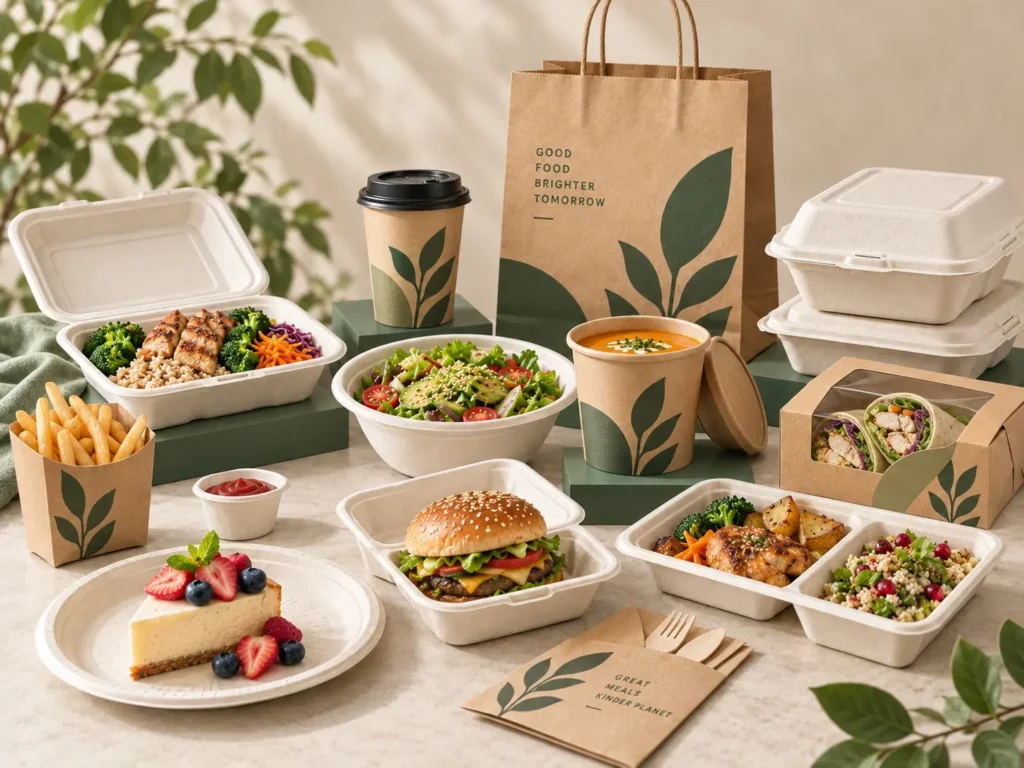
Restaurant Packaging Should Begin With the Menu
Youshang supplies restaurant food packaging for main meals, soup, side dishes, desserts, drinks and takeaway orders. The available range includes bagasse plates, bowls, food containers and trays, kraft paper boxes and bags, paper cups, straws and cutlery.
A restaurant packaging system combines the containers, lids, cups, cutlery and bags used for one menu. Planning them around the food, portion and service method helps the products fit both the meal and one another.
How Should Restaurants Choose Packaging for Different Foods?
The best starting point is the food being served. Product shape, depth, usable space and closure should match the portion rather than being selected by appearance alone.
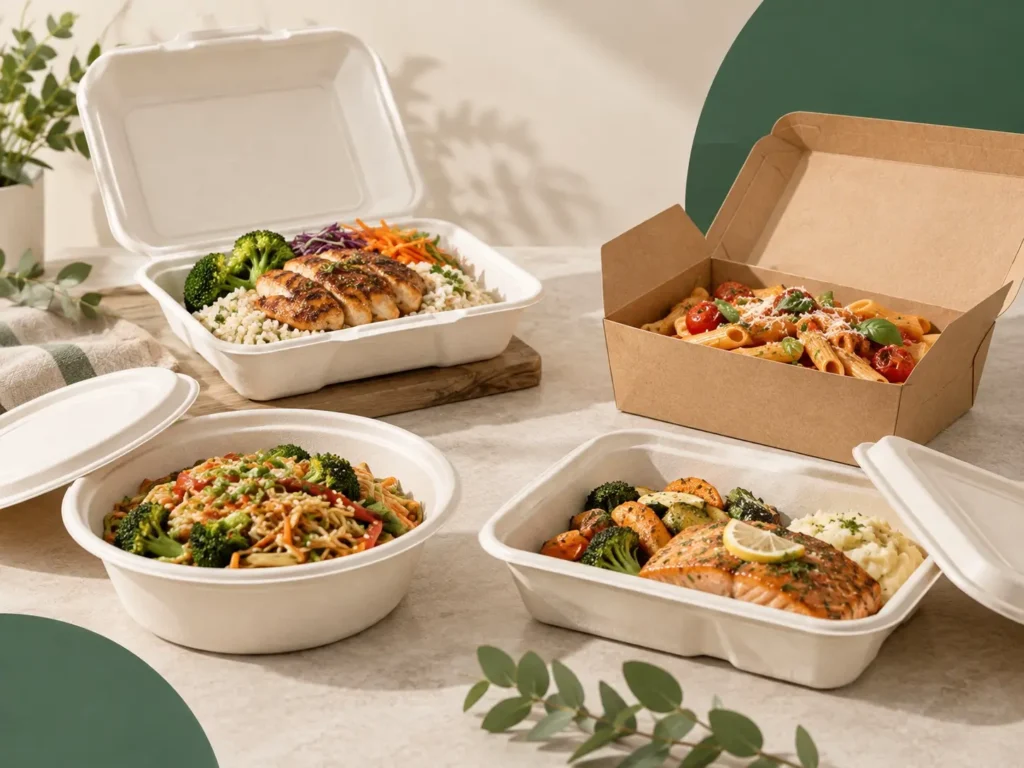
Main Meals
Main Meals Need Enough Usable Space
Rice dishes, pasta, noodles and prepared meals may use bagasse food containers, containers with separate sections or kraft paper food boxes.
The stated capacity is only a starting point. Fill a sample with the normal portion and confirm that the food does not reach the rim, press against the lid or prevent proper closing.
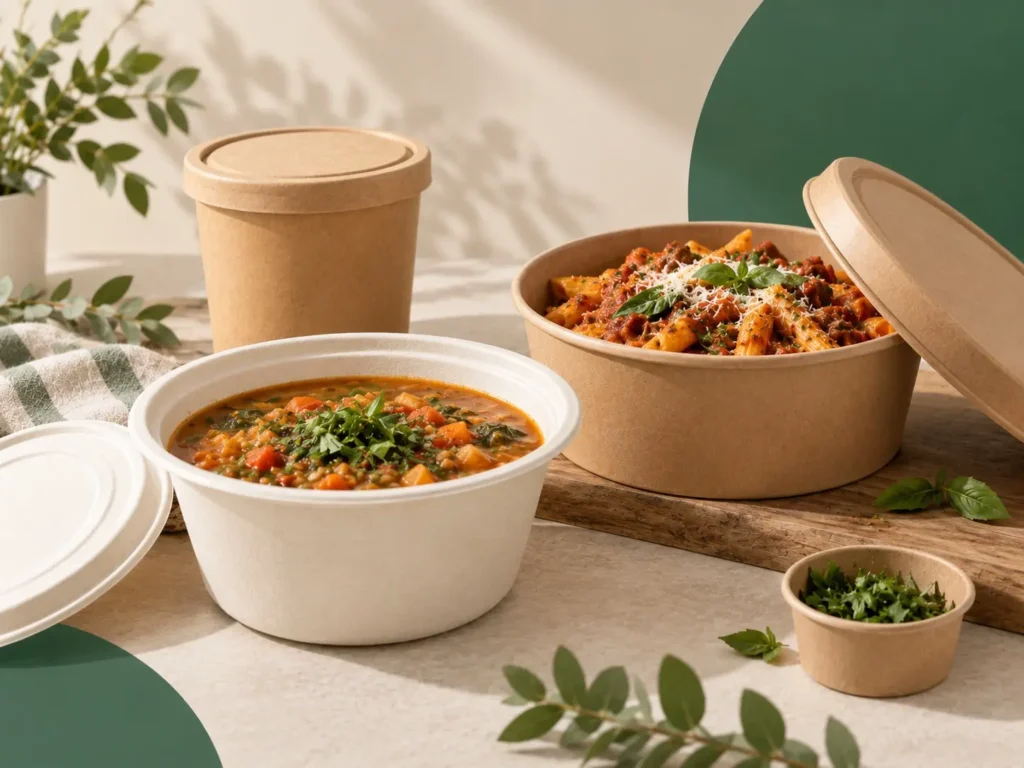
Soup and Saucy Meals
Depth and Lid Fit Matter as Much as Capacity
Soup, curry, noodles and meals containing sauce normally require a deeper bol or food container with a matching lid.
A shallow container and a deep bowl can have the same capacity but behave differently when carried. Test the exact bowl and lid together because similar diameters do not guarantee the same rim fit.
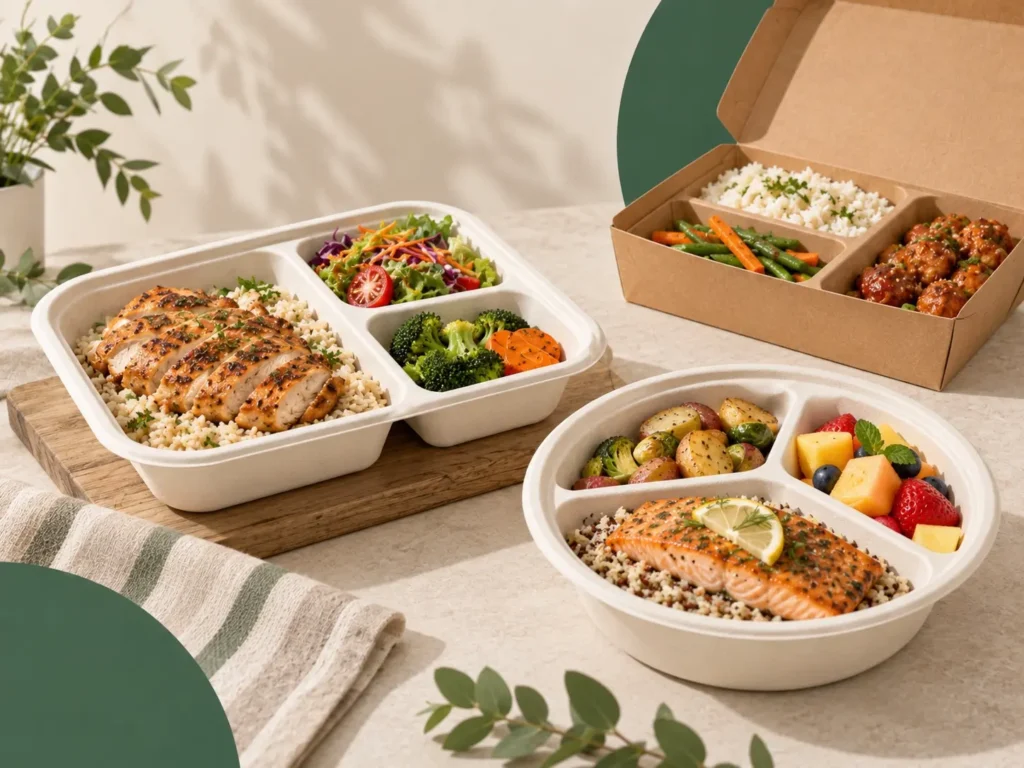
Meals With Side Dishes
Separate Sections Should Follow the Meal Structure
Separate sections can keep the main dish and side dishes apart, but every divider reduces the flexible space inside the container. Compare the size of each section, and test meals containing thin sauce because dividers may not completely stop movement between sections.
Burgers, Snacks and Bakery Items
The Internal Shape Should Fit the Food
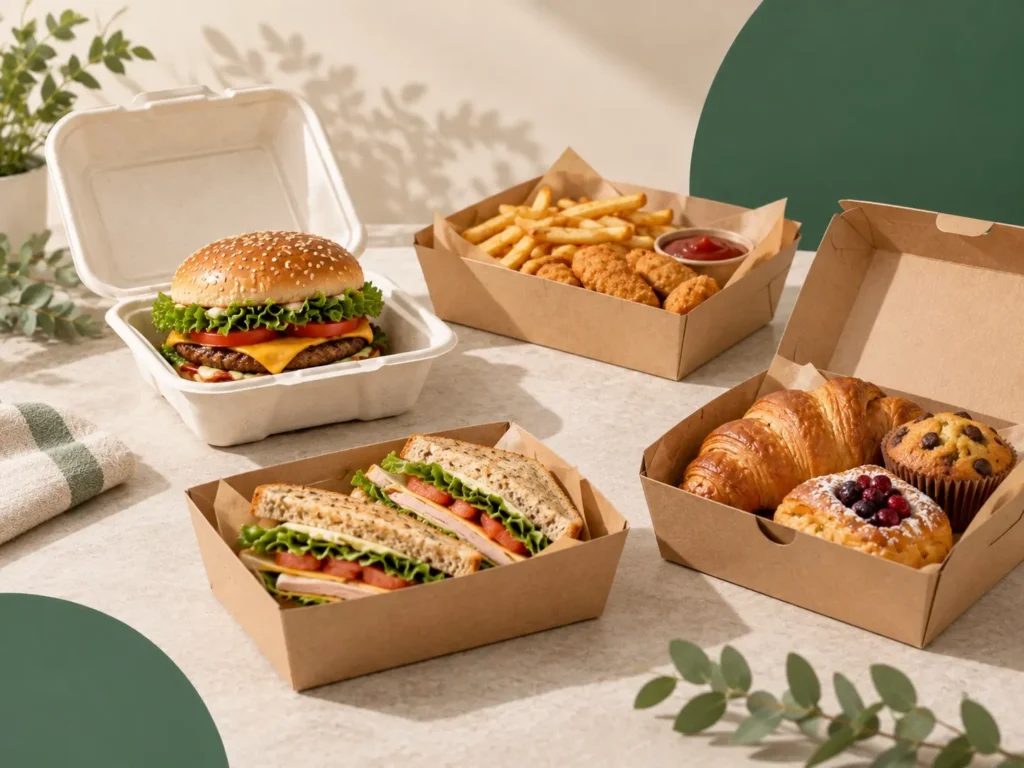
Burgers, sandwiches, fried snacks and pastries may use clamshell containers, kraft paper food boxes, plates or small trays.
A small package can press the food, while an oversized box wastes bag space and can make the portion appear smaller. Staff should also be able to close it without forcing tabs or slowing service.
Boissons
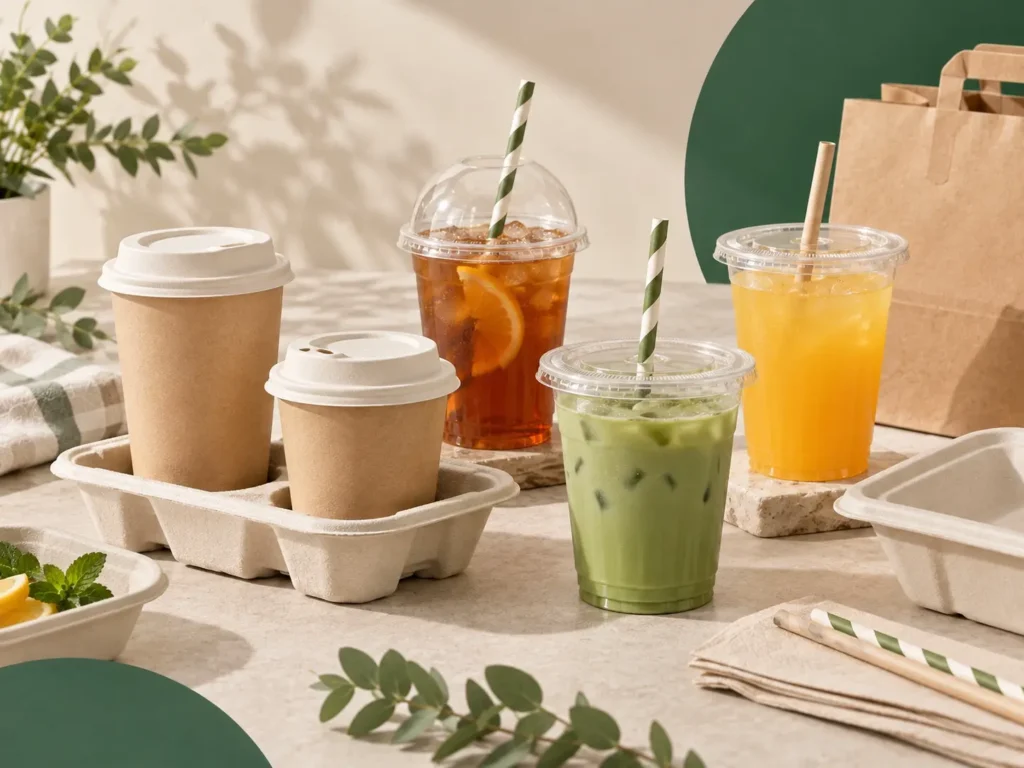
Choose the Cup, Lid and Straw as One Combination
Select a gobelet en papier with its matching lid. Cups with the same capacity can have different top diameters. When a paille en papier is needed, match its length to the cup and its diameter to the drink and lid opening.
How Do You Build a Complete Restaurant Packaging System?
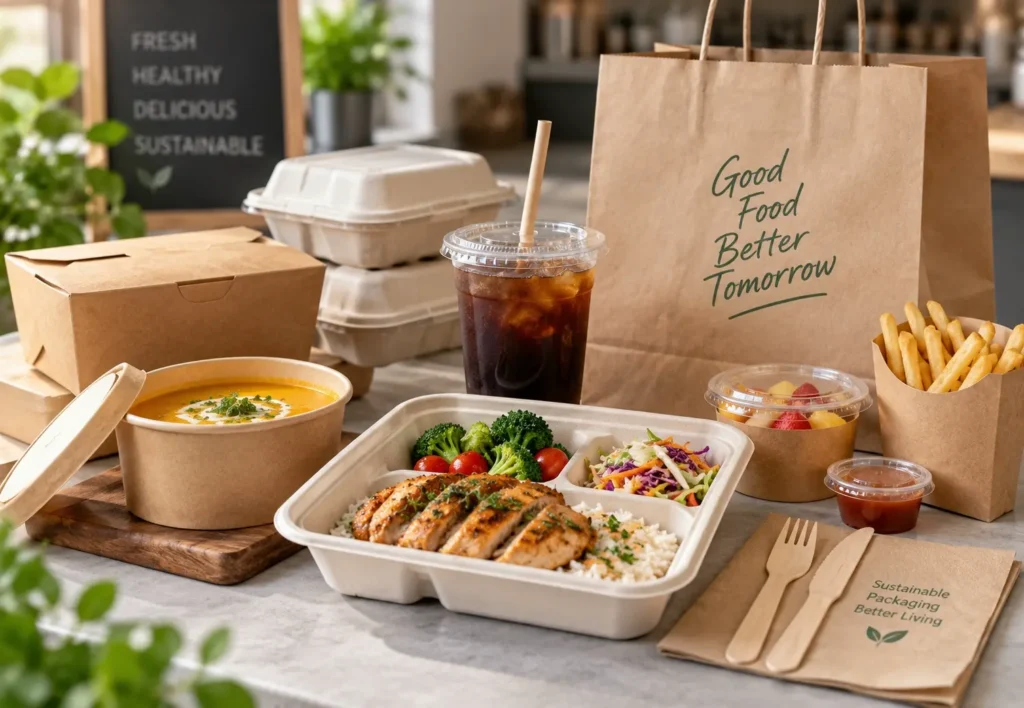
Begin with the main food package, then add only what completes the order. A rice meal may need a divided container, soup a deeper bowl and lid, and a drink the correct cup-and-lid combination.
Dine-in packaging focuses on presentation and handling. Takeaway orders also need secure closures and a paper bag sized after the containers and drinks are selected. Delivery orders require additional carrying and stacking checks.
How Can Restaurants Simplify Product Sizes and Order Quantities?
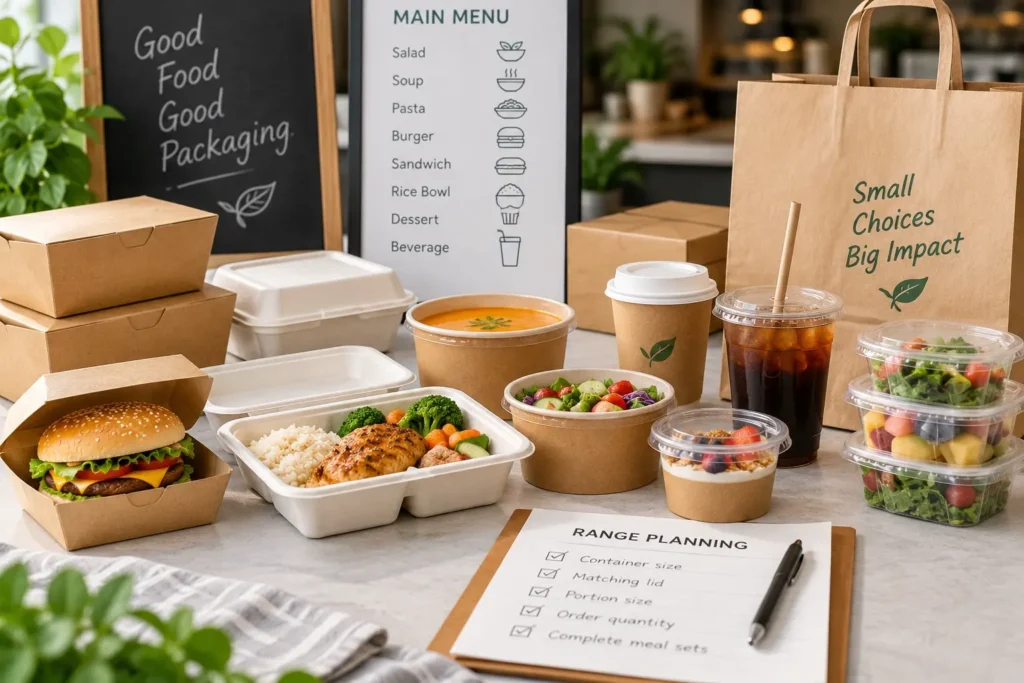
Use a small, practical packaging range built around the restaurant’s main menu items. Foods with similar portions and handling needs may share one container, while soup and saucy meals need packaging suited to liquids.
Match each bowl, cup and container with the correct lid, then plan quantities according to actual use. Count complete meal and drink sets instead of ordering every accessory in equal numbers.
How Can Restaurants Test Packaging During Normal Service?
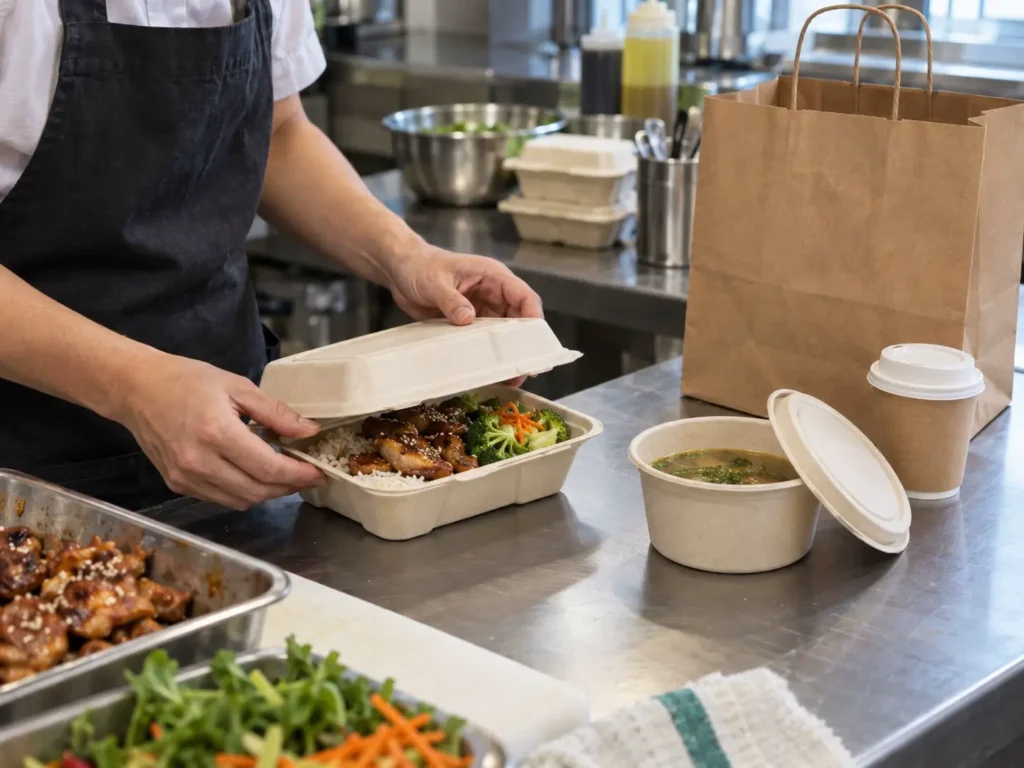
Test the packaging with two or three frequently ordered menu items. Ask staff to fill, close, label and place each item in the usual takeaway bag. This shows whether the size, lid and packing speed work during normal service.
After the usual holding or delivery time, check whether the food still fits well, the lid stays closed and the container remains easy to carry and eat from. Record the exact container and matching lid before placing a bulk order.
How Should Custom Restaurant Packaging Be Planned?
Custom branding should begin after the restaurant has selected packaging that works with the menu.
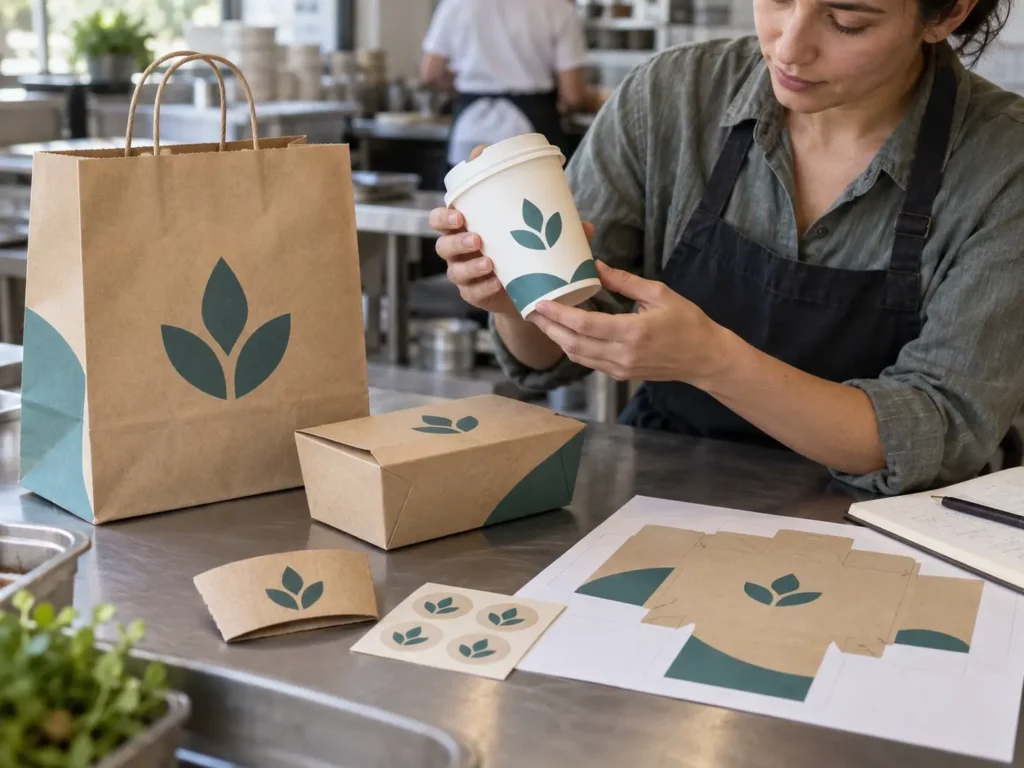
Depending on the product, branding may use printed cups, food boxes, bags, labels, sleeves, wrappers or outer cartons. A new product shape is not always necessary when brand presentation is the main goal.
Artwork must be prepared for the exact product. Cup seams, box folds, closing tabs and bag handles affect what remains visible, so each shape and size may need its own layout.
Keep logos, colors and wording consistent across the range. Confirm any product or disposal claims for the exact item and destination market before printing.
Restaurant Packaging Questions
The suitable packaging depends on the meal, portion, closure and time between packing and eating. Main meals may use food containers or paper boxes, while soup and saucy meals normally require deeper products with a matching lid.
It may be possible when the portion, depth, closure and food performance suit each meal. Every important menu item should be tested instead of assuming that one successful test applies to all foods.
Not always. Some containers have an attached lid, while others use a separate lid. The lid type, fit, packing quantity and price should be confirmed for the exact product.
Branding options depend on the selected product, printing area and order requirements. Printing, labels, sleeves, bags and branded cartons can be reviewed after the product is confirmed.