



نعم، يمكن لأوعية تفل قصب السكر استيعاب الحساء والكاري والصلصات والأطعمة السائلة الأخرى أثناء الاستخدام العادي في خدمات تقديم الطعام والوجبات الجاهزة. ويعتمد أداء هذه الأوعية على هيكلها وكثافة أليافها ومعالجة سطحها ودرجة حرارة الطعام ومدة الاحتفاظ به. وينبغي على المشترين اختبار الوعاء المختار مع الأطعمة الفعلية التي سيقدمونها قبل تقديم طلب شراء بالجملة.
هذه الإجابة الموجزة لا تعني أن جميع الأوعية المصنوعة من تفل قصب السكر تعمل بنفس الطريقة. كما أنها لا تعني أن الوعاء المصنوع من الألياف المقولبة يمكنه تخزين السوائل لفترة غير محدودة.
الوعاء المستخدم لتقديم السلطة الباردة لا يخضع لنفس الظروف التي يخضع لها الوعاء المستخدم لتقديم الحساء الساخن. كما أن الوعاء المستخدم للتقديم الفوري له متطلبات مختلفة عن الوعاء المستخدم للتوصيل الذي يستغرق ساعة واحدة.
يجب على المشترين ألا يقتصروا على اسم المادة فقط. بل عليهم التحقق من مواصفات المنتج، والغطاء، ونوع الطعام، والاستخدام المتوقع. يشرح هذا الدليل كيفية احتواء أوعية تفل قصب السكر على السوائل، وما يجب على المشترين التأكد منه قبل الطلب.
ما هو وعاء الباجاس؟
الوعاء المصنوع من بقايا قصب السكر هو وعاء طعام مصنوع من الألياف المقولبة. حيث يقوم المصنعون بمعالجة بقايا قصب السكر لتحويلها إلى عجينة، ثم يصنعون الوعاء تحت درجة حرارة وضغط محكومين.
المصطلح تفل قصب السكر يشير إلى المادة الليفية المتبقية بعد سحق سيقان قصب السكر لاستخراج عصيرها. ويمكن معالجة هذه الألياف لتحويلها إلى عجينة واصطناعها في صناعة الأطباق والأوعية والصواني وحاويات الطعام الجاهزة.
عادةً ما يتميز الوعاء النهائي بهيكل متين وسطح يظهر فيه الألياف النباتية. ولا يعتمد أداءه على المادة الخام وحدها، بل يؤثر تصميم القالب ووزن المنتج وسماكة الجدران وعملية الضغط والمعالجة السطحية أيضًا على الوعاء النهائي.
قد يبدو وعاءان مصنوعان من تفل قصب السكر متطابقين تقريبًا، لكن أداء كل منهما يختلف عند استخدامهما مع الحساء الساخن أو الأطعمة الدهنية. لذا، ينبغي على المشترين التعامل مع “وعاء تفل قصب السكر” باعتباره فئة من المنتجات، وليس بمواصفات ثابتة واحدة.
ما مدى قدرة الأوعية المصنوعة من تفل قصب السكر على الاحتفاظ بالسوائل؟
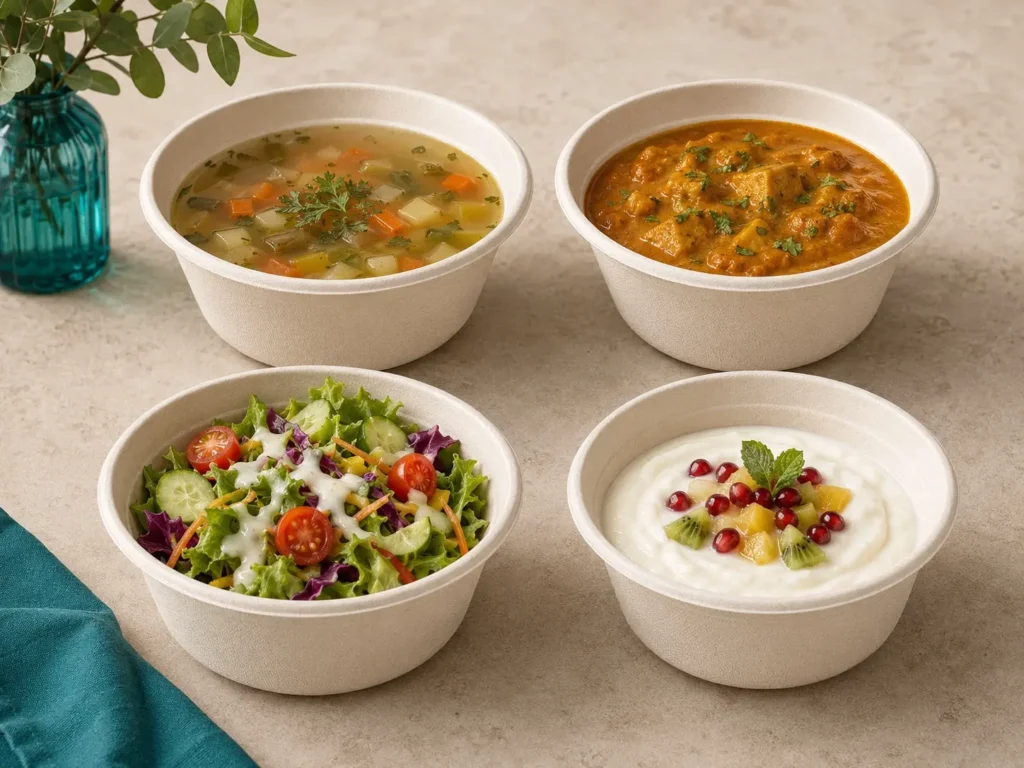
يمكن لأوعية تفل قصب السكر استيعاب العديد من الأطعمة السائلة وشبه السائلة خلال فترات التقديم العادية وفترات الطلبات الجاهزة. ومن الأمثلة الشائعة على ذلك: الحساء، والكاري، والعصيدة، والمعكرونة بالمرق، والزبادي، وتتبيلات السلطة، والوجبات التي تحتوي على صلصة.
يجب أن يحافظ الوعاء المناسب على شكله خلال فترة التخزين المتوقعة. ويجب أن يظل قاعه ثابتًا. كما يجب ألا تنهار جوانبه الجانبية أثناء التعامل معه بشكل عادي. ويجب أن تظل حافته أيضًا متينة بما يكفي لدعم الغطاء.
قد تختلف النتيجة عندما يكون السائل ساخنًا جدًّا أو رقيقًا أو دهنيًّا. كما قد تختلف أيضًا عندما يبقى الطعام في الوعاء لفترة طويلة.
لا يخلق الكاري السميك نفس الظروف التي يخلقها المرق الصافي. كما أن الزبادي البارد يسبب ضغطًا حراريًا أقل على الوعاء مقارنةً بالحساء الساخن. يجب على المشترين تحديد نوع الطعام الفعلي قبل مقارنة مواصفات الأوعية.
ما هي أنواع السوائل التي يمكن لأوعية تفل قصب السكر استيعابها؟
يمكن استخدام الأوعية المصنوعة من تفل قصب السكر في تقديم العديد من الأطعمة السائلة، ومنها:
- الحساء الساخن والبارد
- الكاري واليخنة
- المعكرونة بالمرق
- العصيدة ودقيق الشوفان
- الزبادي والحلويات
- سلطة مع صلصة
- أطباق الأرز بالصلصة
- أطباق جانبية مع الصلصة
يعتمد الاختيار الصحيح على كمية الماء والزيت والحرارة الموجودة في الطعام. فمن الأسهل التعامل مع كمية صغيرة من الصلصة مقارنةً بوعاء كامل من المرق الساخن.
كما أن مدة الاحتفاظ المتوقعة مهمة أيضًا. فقد يقدم المطعم الطعام في غضون بضع دقائق، بينما قد تحتاج شركة التوصيل إلى أن يظل الوعاء ثابتًا لمدة ساعة أو أكثر.
هل الأوعية المصنوعة من تفل قصب السكر مقاومة للماء؟
عادةً ما تُصمم الأوعية المصنوعة من تفل قصب السكر لتتحمل الرطوبة أثناء استخدامها في قطاع خدمات الطعام. ومع ذلك، فإن مصطلحي “مقاومة للرطوبة” و“مقاومة للماء” لا يعنيان الشيء نفسه.
تعني مقاومة الماء أن الوعاء يمكنه إبطاء امتصاص السوائل والحفاظ على هيكله لفترة معقولة. أما مصطلح «مقاوم للماء» فيعني أن الماء لا يمكنه اختراق المادة في ظل الظروف المحددة.
يجب ألا يصف الموردون كل وعاء مصنوع من تفل قصب السكر بأنه مقاوم للماء تمامًا في جميع درجات الحرارة وجميع فترات الاحتفاظ بالسائل. فالنتيجة تعتمد على مواصفات الوعاء، ودرجة حرارة السائل، ومدة التلامس، ومعالجة السطح.
ينبغي على المشترين أن يطلبوا شروط استخدام واضحة بدلاً من الاعتماد على بيان عام واحد.
هل الأوعية المصنوعة من تفل قصب السكر مانعة للتسرب؟
يمكن أن يوفر الوعاء المصنوع من تفل قصب السكر مقاومة جيدة للسوائل أثناء الاستخدام العادي في قطاع خدمات الطعام. ومع ذلك، فإن الوعاء ليس سوى جزء واحد من المجموعة الكاملة.
كما أن الغطاء والحافة مهمان أيضًا. فالغطاء المحكم يمكن أن يقلل من انسكاب السوائل أثناء النقل. أما الغطاء غير المحكم فقد يفشل في أداء وظيفته حتى لو ظل جسم الوعاء جافًا.
يجب على المشتري التحقق من ملاءمة الغطاء بشكل صحيح قبل وبعد ملء الوعاء. كما يجب أن يشمل الاختبار إمالة الوعاء برفق، وتكديسه، وحركاته الطبيعية أثناء التوصيل.
يجب أن ترتبط كلمة “مانع للتسرب” دائمًا بشرط محدد. ويجب أن يشمل هذا الشرط نوع السائل ودرجة الحرارة ومدة التخزين وطريقة النقل.
هل يمكن لأوعية تفل قصب السكر أن تحمل الحساء الساخن؟
يمكن أن تكون الأوعية المصنوعة من تفل قصب السكر مناسبة لتقديم الحساء الساخن شريطة أن يكون المنتج قد صُمم واختُبر لهذا الغرض. ومع ذلك، يجب على المشتري التأكد من درجة حرارة الحساء ومحتواه من الزيت ومدة الاحتفاظ به وغطاء الوعاء.
يمكن أن يؤثر السائل الساخن على الألياف المقولبة بسرعة أكبر من الأطعمة الباردة. فالحرارة قد تزيد من امتصاص الرطوبة. كما أن الزيت قد يشكل تحديًا آخر. فقد يتطلب الحساء الرقيق والدهني مقاومة أفضل مقارنة بالعصيدة السميكة التي تُقدَّم عند درجة حرارة أقل.
كما يجب أن يتمتع الوعاء بمتانة كافية لتسهيل التعامل معه. فقد يرفعه العميل بيد واحدة. وقد يقوم عامل التوصيل بتكديس عدة أوعية داخل حقيبة واحدة. كما أن الغطاء قد يمارس ضغطًا على حافة الوعاء.
لا ينبغي للمشترين اختيار وعاء الحساء بناءً على سعته فقط. فقد يختلف وزن وعائين سعة كل منهما 12 أونصة، وكذلك شكل جدرانهما وتصميم حوافهما.
توصي شركة «يوشانغ» باختبار الحساء الفعلي عند درجة الحرارة المقررة لتقديمه. ويجب أن يتم الاختبار باستخدام الغطاء المطابق وفي غضون الوقت المتوقع للتسليم.
هل يؤدي السائل الساخن إلى تليين وعاء مصنوع من تفل قصب السكر؟
يمكن للسائل الساخن أن يجعل وعاءً مصنوعًا من تفل قصب السكر غير مناسب أكثر ليونة بمرور الوقت. وتعتمد النتيجة على درجة حرارة السائل، وسماكة الوعاء، وكثافة الألياف، ومعالجة السطح، ومدة التعرض للسائل.
عادةً ما يكون القاع والجدار الجانبي السفلي هما الجزءان الأكثر تعرضًا للاتصال بالسائل لفترة أطول. يجب على المشترين فحص هذه المناطق أثناء الاختبار. كما يجب عليهم التحقق مما إذا كان الحافة تتغير في شكلها بعد ملء الوعاء.
لا يؤدي حدوث قدر ضئيل من التليين دائمًا إلى تعطل المنتج. والسؤال الأساسي هو ما إذا كان الوعاء يظل آمنًا وعمليًّا أثناء الاستخدام المقصود له.
يجب أن يكون الوعاء قادرًا على حمل الطعام. كما يجب أن يظل مريحًا عند الإمساك به. ويجب أيضًا أن يثبت الغطاء المناسب في مكانه.
هل يؤثر الزيت على وعاء مصنوع من تفل قصب السكر؟
Oil can affect molded fiber differently from plain water. Foods such as curry, meat sauce and oily soup contain both moisture and fat. This combination can make the application more demanding.
The buyer should check whether oil marks appear on the outside of the bowl. The buyer should also check whether the bottom becomes soft or whether the sidewall loses strength.
A short restaurant service period and a long delivery period can produce different results. The test should copy the longest realistic use condition.
For oily or sauce-based meals, Youshang asks buyers to provide the food type, serving temperature and expected holding time. This information helps the team recommend a more suitable bowl for sample testing.
Can Bagasse Bowls Hold Cold Liquids?
Bagasse bowls can also be used for cold soup, yogurt, fruit, salad, desserts and other chilled foods. Cold food normally places less heat stress on the bowl.
Cold use can still create moisture. Condensation may form on the outside when a chilled product enters a warm room. A refrigerated product may also stay in contact with the bowl for much longer than a freshly served meal.
The buyer should test both the food and the storage process. The test should cover refrigeration time, display time and transport time. It should also check the bottom of the bowl after removal from refrigeration.
A bowl that works well for immediate salad service may not be suitable for overnight retail display.
Can Bagasse Bowls Be Used for Refrigerated Food?
Some bagasse bowls can be used for refrigerated food when the product specification supports that application. Buyers should not assume that refrigeration performance is the same for every bowl.
The test should include the intended food, actual storage temperature and expected storage time. The buyer should also check the lid after refrigeration.
Condensation can affect labels, cartons and secondary packaging even when the bowl remains stable. Retail buyers should test the complete package, not only the bowl.
How Long Can Bagasse Bowls Hold Liquid?
There is no single holding time for every bagasse bowl and every liquid.
A restaurant may only need the bowl to hold soup from the kitchen to the table. A takeaway business may need 30 to 60 minutes. A delivery company may need a longer period and more stacking strength.
The actual time depends on the following conditions:
| Factor | Why it matters |
|---|---|
| Liquid temperature | Higher temperatures can increase stress on the fiber structure. |
| Water content | Thin liquids may reach weak areas more easily. |
| Oil content | Oil can affect the bowl differently from plain water. |
| Bowl weight | Product weight can affect structure, but weight alone does not prove performance. |
| Wall thickness | Thin areas may soften before the rest of the bowl. |
| Surface treatment | Treatment can affect resistance to moisture and grease. |
| Holding time | Longer contact gives the liquid more time to affect the material. |
| Lid fit | A poor lid can cause spills even when the bowl performs well. |
| Transport conditions | Tilting, stacking and vibration can expose weak points. |
Buyers should state the expected holding time when requesting a quotation. The supplier can then recommend a relevant product and test method.
Are Bagasse Bowls Suitable for Long-Term Liquid Storage?
Bagasse bowls are mainly designed for foodservice, takeaway and short-term food packaging. They should not automatically be treated as long-term liquid storage containers.
Long-term storage creates different demands. The food may stay in contact with the material for many hours or days. Refrigeration, condensation and food chemistry may also affect the result.
Buyers who need retail storage should explain the complete use condition. They should include the filling process, storage temperature, shelf time and closure requirement.
Does a Bagasse Bowl Need a Lid?
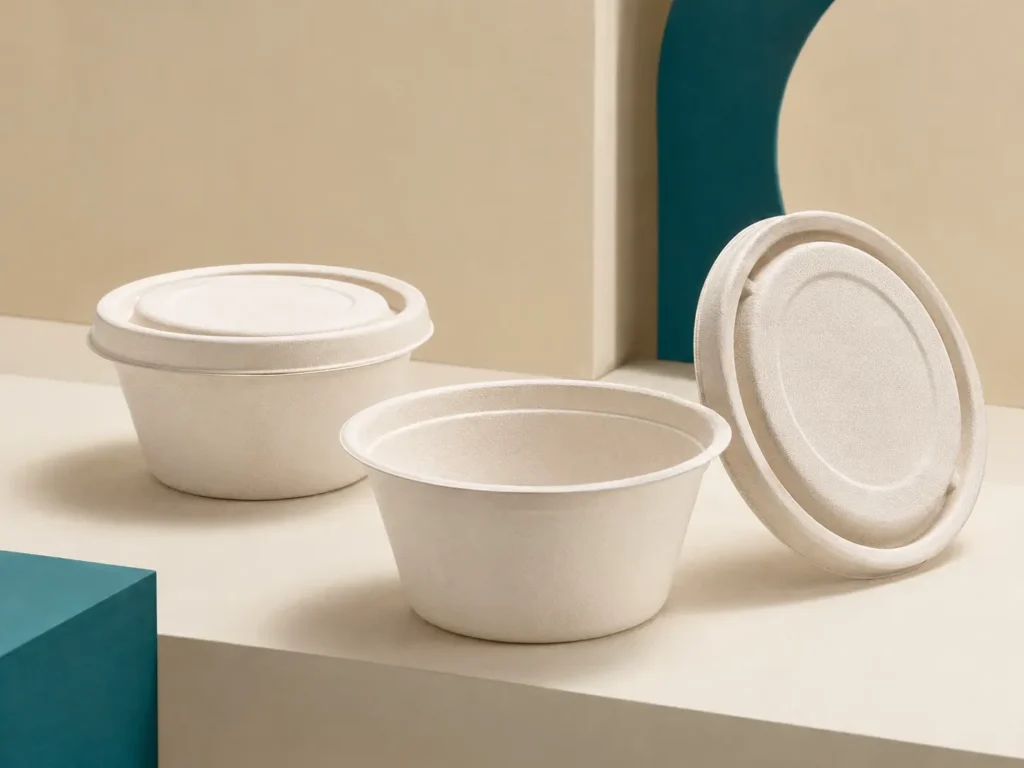
A bagasse bowl does not always need a lid. The need depends on the food and sales channel.
| Application | Lid recommendation |
|---|---|
| Dine-in soup | Usually optional |
| Takeaway meals | Recommended |
| Food delivery | Strongly recommended |
| Catering buffet | Depends on the service method |
| Cold food display | Confirm storage and display needs |
| Retail prepared food | Confirm sealing, labeling and stacking |
The lid material may differ from the bowl material. Buyers should confirm the specifications of both parts.
Buyers should also confirm whether bowls and lids are packed together or supplied separately. This detail can affect warehouse management, packing work and purchasing cost.
How Should Buyers Check the Lid Fit?
The buyer should fill the bowl with the intended food and attach the matching lid. The buyer should check whether the lid closes evenly around the full rim.
The buyer should then lift and move the package. A gentle tilt can help identify gaps. A stacking test can show whether pressure causes the lid to loosen.
The buyer should repeat the test with hot food if the bowl will hold hot soup. Heat may affect the rim and closure.
A capacity label does not guarantee lid compatibility. Two 12oz bowls may use different rim diameters and lid structures.
Can Bagasse Bowls Be Stacked for Delivery?
Bagasse bowls can be stacked when the bowl and lid have been designed for that purpose. The complete package must remain stable during movement.
The buyer should test the expected number of bowls in one delivery bag. The lower bowl must support the weight above it. The lid should not bend into the food.
The delivery test should include normal movement and short transport. It should also check whether the package slides or tilts inside the bag.
Can You Microwave a Bagasse Bowl With Liquid Inside?
Some bagasse bowls are designed for short microwave reheating. Buyers should check the specification of the exact product before making a microwave-safe claim.
Youshang’s current 12oz sugarcane bagasse bowl specification lists microwave use and a stated temperature range of -20°C to 120°C. These details apply to that product specification. They should not be copied to every bowl without confirmation.
Microwave performance also depends on the food. Water, oil and sugar heat at different rates. Thick food may heat unevenly. The food may become much hotter than the outside of the bowl suggests.
Buyers should define the expected microwave time and power level. They should then carry out a controlled sample test.
Should the Lid Be Removed Before Reheating?
The lid should be checked separately from the bowl. A bowl may be suitable for microwave reheating while its lid is not.
Some packages require the lid to be removed. Other lids may need to be loosened to release steam. Buyers should follow the confirmed product instructions.
The final instructions should match the bowl, lid and intended food. Buyers should not use one general microwave claim for different product combinations.
What Bagasse Bowl Size Should You Choose?
The correct capacity depends on the food portion and required headspace.
A 12oz bowl represents a nominal capacity of about 350ml. The practical filling volume may be lower. Soup needs space below the rim, especially during delivery.
An overfilled bowl has a higher spill risk. It may also prevent the lid from closing correctly.
A smaller bowl may suit desserts, side dishes and small soup portions. A medium bowl may suit rice, noodles, salad and regular soup servings. A larger bowl may suit main meals, large salads and noodle dishes with broth.
The buyer should check both the nominal capacity and the recommended serving capacity.
Is a 12oz Bagasse Bowl Suitable for Soup?
A 12oz bagasse bowl can be suitable for a small soup portion, side dish, dessert, salad or light meal. The final choice depends on the serving volume and required space below the rim.
Buyers should fill the sample with the exact serving volume. They should not rely only on the stated capacity.
The opening diameter also matters. A wide bowl can improve presentation and make the food easier to eat. A deeper bowl can provide better control for liquid during transport.
Youshang recommends sending the serving volume, food weight and a reference photo with the inquiry.
How Should Buyers Test a Bagasse Bowl?
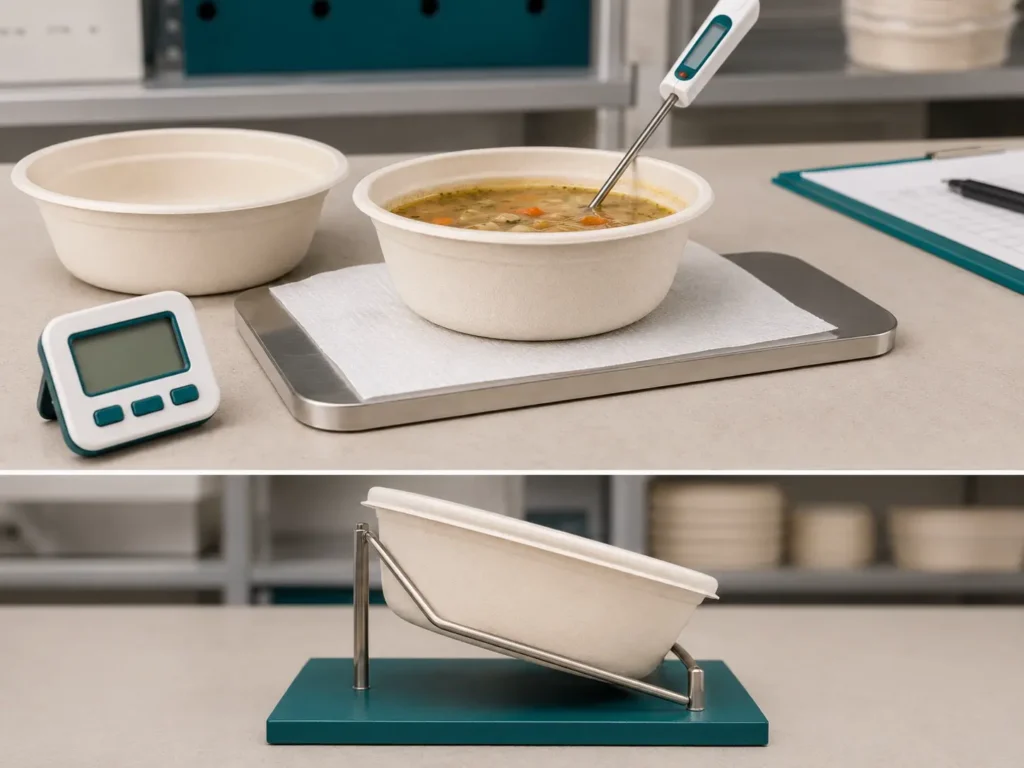
A useful test should copy the actual service conditions as closely as possible.
- Fill the bowl with the intended food or liquid.
- Record the filling temperature.
- Leave enough space below the rim.
- Attach the matching lid if the final package needs one.
- Keep the bowl filled for the expected serving or delivery time.
- Check the bottom, sidewall and rim for softening or marks.
- Tilt the closed package gently and inspect the closure.
- Stack several filled bowls if the delivery process requires stacking.
- Place the packed bowls in the usual delivery bag or carton.
- Repeat the test after microwave reheating if reheating is required.
The buyer should record the result. Photos and notes can help the supplier understand any problem.
The buyer should also test more than one sample. One successful sample does not prove production consistency.
What Should Bulk Buyers Confirm Before Ordering?
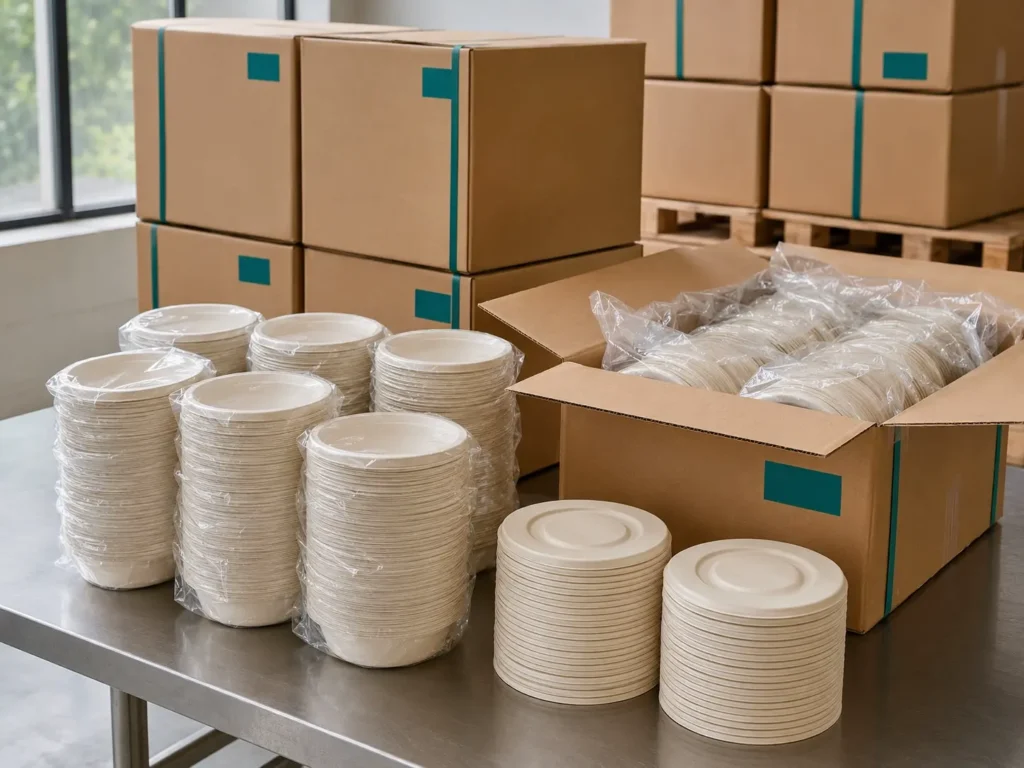
Bulk buyers need to confirm more than the bowl capacity and unit price.
Which Product Specifications Should Be Confirmed?
The buyer should confirm:
- Product name and model
- المواد
- السعة
- Top diameter
- Bottom diameter
- Bowl height
- Product weight
- Color
- Available lid
- Temperature conditions
- Microwave requirements
- Oil and moisture resistance
- Intended food application
These details should appear in the final specification or order confirmation.
Which Packaging Details Should Be Confirmed?
The packing specification should include the number of pieces per bag, bags per carton and total pieces per carton.
The buyer should also confirm the carton dimensions, net weight and gross weight. These numbers affect storage, shipping and landed cost.
A distributor may need private-label packaging, barcode labels or customized shipping marks. A restaurant group may prefer bulk packing. A retailer may need smaller sales packs.
Which Documents Should Buyers Request?
The required documents depend on the product and destination market.
Food packaging must meet the rules that apply in the country where it is sold. The U.S. Food and Drug Administration explains that food packaging and its components can fall within food-contact substance requirements.
The European Commission also requires food-contact materials placed on the EU market to follow its safety framework.
Buyers should request documents for the actual product and intended market. They should not assume that one general certificate covers every material, size and application.
How Youshang Supports Bagasse Bowl Buyers
Qingdao Youshang Packaging Products Co., Ltd. specializes in disposable pulp tableware and food packaging. The Youshang product range includes sugarcane bagasse plates, bowls, food containers, boxes and trays.
Youshang supports standard product supply, wholesale orders and custom packaging projects. The company reviews each inquiry according to the food type, capacity, temperature, holding time, delivery method and packing requirement.
This process helps buyers select a bowl for a real application instead of choosing from a product photo alone.
Buyers can review the wider sugarcane bagasse tableware range for related products.
For liquid food delivery, buyers should also consider the complete packaging system. The bowl, lid, label, bag and stacking method all affect the final result. Youshang can review these requirements as part of a food delivery packaging solution.
What Information Should You Send Youshang?
Buyers should provide the following information:
- Food type
- Serving temperature
- Required capacity
- Serving volume
- Expected holding time
- Delivery method
- Lid requirement
- Order quantity
- Packing requirement
- Destination country
Buyers can also send a sample, drawing, reference image or current packaging specification. The Youshang team can review the available product and customization needs before quotation.
الأسئلة الشائعة
Can Bagasse Bowls Hold Soup?
Yes. A suitable bagasse bowl can hold hot or cold soup during normal serving and takeaway use. Buyers should confirm the bowl specification, soup temperature, oil content, holding time and lid fit.
Do Bagasse Bowls Get Soggy?
A bagasse bowl can soften when it stays in contact with hot or wet food for too long. The actual result depends on the bowl structure, surface treatment, liquid type and temperature.
Are Bagasse Bowls Suitable for Takeaway?
Yes. Bagasse bowls can suit takeaway meals when the bowl and lid match the food and delivery conditions. Buyers should test stacking, movement and expected delivery time.
Can Bagasse Bowls Hold Curry?
Bagasse bowls can hold many curry and sauce-based foods. Oil and heat can make the application more demanding, so buyers should test the actual curry before ordering.
Can Bagasse Bowls Go in the Refrigerator?
Some bagasse bowls can be used for chilled food. Buyers should confirm the product specification and test condensation, holding time and structural strength after refrigeration.
Are All Bagasse Bowls Compostable?
Bagasse is a plant-fiber material. However, a finished product’s compostability claim depends on its complete composition and supporting documents. Buyers should request product-specific information and check the disposal system in the destination market.
Where Can I Buy Bagasse Bowls in Bulk?
Importers, foodservice distributors, restaurant groups and packaging buyers can contact Youshang with the required capacity, quantity, food type, lid and packing method. The Youshang team can review the project and recommend an available product for sample testing.
الخلاصة
Bagasse bowls can hold liquid when the product matches the food and use conditions. A suitable bowl can serve soup, curry, porridge, sauces and other moist foods.
The buyer still needs to consider temperature, oil content, holding time, lid fit and delivery conditions. A capacity number alone cannot confirm product performance.
A real food test provides a better answer. Buyers should use the intended food, matching lid and actual delivery process before approving a bulk order.
يوشانغ helps buyers review these requirements before production. Send Qingdao Youshang Packaging Products Co., Ltd. the food type, serving temperature, required capacity, holding time, quantity and destination market. The team can then recommend a suitable bagasse bowl and packaging solution for evaluation.